Monday, October 11, 2010

Buried


Who’d have thought ninety minutes of Ryan Reynolds buried in a small wooden box would make for a clever and exciting thriller? Surprisingly this simple set up proves to be very effective. Running the gamut of darkly funny to claustrophobic, this kidnap drama builds up tension in both plausible and ridiculous ways. Highlighting the talent and inventiveness of all involved, Buried is griping and entertaining, making it perfect cinema viewing.

At the start of the film Paul Conroy (Reynolds), an American civilian truck driver working in Iraq, wakes up in a wooden coffin, buried underground. Not knowing who put him there, or why, and unaware of his location Paul’s chances of survival diminish with every breath he takes. At his disposal he has a mobile, a penknife, a pencil and an assortment of portable light sources- will he escape?

The film never ascends above the ground, showing the action from Paul’s POV throughout. Though this was probably as much an economic decision as an artistic one, it is still a brave choice- which has added to the atmosphere and power of the film. Both the audience and Paul are kept in the dark as to what is happening on ground level. Despite the role being contained, Reynolds’ physicality needs to be commended. Oscillating from sardonic wit to panic, anger to despair- Reynolds’ performance is probably his best to date.

With the stakes in this film ever increasing, the director Rodrigo Cortés builds suspense by setting up red herrings and distractions. The film introduces other voices to the story through Paul’s phone conversations. Paul’s efforts to get himself rescued highlight the darkly corrupt world of contractors in Iraq, amongst other problems with America’s involvement in that region. Handled without much subtlety the ‘political’ aspects of the script are probably the film’s weakest part, and the least original. However the film’s astute play on modern communication and accessibility is razorsharp-smart- never has a film better shown the terror of being put on hold.

Cinematographer Eduard Grau, whose previous work includes the sumptuous A Single Man(2009) does an amazing job making this film visually engaging. A range of light sources – flame, torch and light sticks- creates unique shadows and colours inside the coffin. The use of interesting shooting angles enhances Reynolds’ performance- framing his face as the focal point for the film’s action.

Buried is an example of a good idea (from scriptwriter Chris Sparling), well-planned and well executed. This film shows that massive pyrotechnics and expensive special effects aren’t necessary for a successful thriller. A tight script, inventive filmmaking and a good performance are enough.

Images 1,2

First published on Trespass

Thursday, October 7, 2010

Eat Pray, Love


After the break-up of her marriage Elizabeth Gilbert decided to take a year out, travelling to Italy, India and Indonesia. Her year involved indulging in previously restricted carbs in Rome, a spiritual quest in Kolkata and romance in Bali. This reviewer hasn’t read the bestselling book- Eat, Pray, Love about the author’s journey of self-discovery, and thanks to Ryan Murphy’s (Glee) film version, probably never will. No amount of grinning Julia Roberts, Javier Bardem, James Franco and beautiful scenery is enough to sell this pseudo-spiritual, completely dull travel log.

The idea of middle-class malaise that this film examines is a reasonably common theme for indie films. But while it is dealt with using humour, bitter sarcasm and guilt by the likes of Baumbach, Anderson or Holefcener, in this mainstream incarnation it is painfully serious, but ultimately disingenuous.

Watching the film, there are moments when you think it’s not so bad- the scenery is spectacular, and the acting is passable, but then it ramps up the platitudes. Eat, Pray, Love is like one of those novelty books of ancient wisdoms, digested and regurgitated for Western readers that they stack up around counters at bookshops. Without context these sayings are empty words. This is the same with the film- we are taken to three vastly different countries and are fed vapid truisms with no exploration or attempt at real immersion. This isn’t a criticism of the real Elizabeth Gilbert and her journey, but of the film’s structure and script.

Eat, Pray, Love provides characters that are not only uninteresting, but are also uninterested. The filmmakers seem to think that Italy and India are cities as opposed to countries made up of vastly different landscapes and cultures and make very little effort to distinguish specific locality. It is also kind of ironic that Gilbert spends most of her time with people outside the cultures she visits, a Swede (Tuva Novotny) in Italy, a Texan man (an actor who deserves so much better, Richard Jenkins) in India, and a Brazilian man (Bardem) in Bali.

Self-discovery is by definition a form of self-absorption, and never has this been more obvious than witnessing Gilbert ‘finding herself’. Middle class dissatisfaction isn’t meant to be this earnest; this is a film unable to laugh at itself, desperately reaching for importance but falling flat. This film has the vocabulary of day-time TV psychologists- using terms like ‘healing yourself’ and ‘forgiving yourself’, which both lacks honesty and is quite off-putting. Give me real emotions of guilt, embarrassment and confusion any day over the forgettable trite this film exudes.


Images 1,2,3

First published on Trespass

Sunday, September 26, 2010

I'm Still Here


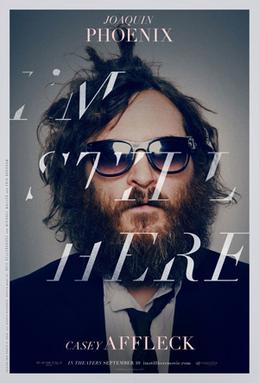
At the end of 2008 Joaquin Phoenix (Walk The Line, Gladiator) announced his retirement from acting, deciding instead to focus on a career in music, specially as a rapper. Phoenix’s dishevelled appearance and unusual candour started rumours circulating that the two-time Academy Award nominee was on the verge of a nervous breakdown. However the presence of his brother-in-law, Casey Affleck, with a camera in tow suggested a more planned and cynical truth. Making his directorial debut Affleck (The Killer Inside Me) spent a year following Phoenix on his new career path. But is the end result- I’m Still Here, a documentary, a mockumentary or something in-between the two?

Prostitutes, drugs, excrement, bad hip-hop music and ego all combine in this portrait of an artist. Phoenix’s exploits; his attempts to get
Sean Combs to produce his album, his relationships with his PAs/friends and his half-arsed publicity for his last film- Two Lovers- crescendos to a point where it is all pretty hilarious. For the majority of its 108 mins running time I’m Still Here is a cringingly funny film, until suddenly it isn’t. As the deluded star’s life turns into complete car-wreck viewing- “I’m going to be a joke forever” he cries after the infamous David Letterman interview, all at once it becomes unbearably tragic.


As a viewer logic tells you that
I’m Still Here is an orchestrated piece of performance art. Phoenix, Affleck and their friends have got together and planned an elaborate hoax, designed to poke fun at the industry they work in and the media hype that encircles it. If this isn’t the case, Affleck would have to be one of the biggest bastards in the world- encouraging his brother-in-law on an increasingly unstable downwards spirally path, in order to make an interesting film. But yet still there is a certain reality to the make-believe, this isn’t simply a satire about modern fame. (Click here to read Affleck’s interview with NYTimes)

Whether you call it method acting or performance art, the actor blurred the lines between fact and fiction- and the ramifications of this and the questions raised make the film all the more intriguing and unsettling. Was freedom what the actor was looking for by perpetuating this giant hoax? The Phoenix of the documentary is a chain-smoking, self-obsessed, moody character with a complete lack of personal hygiene- not the most likeable persona to create for yourself, but this is the role the actor had to live for 12 months. Is that a choice someone who was happy with their life would make?

This film encourages the audience to be voyeurs, giving us (the appearance) of unedited access. Yet ultimately the film disparages the intrusion, highlighting our need for car-crash celebrities like Britney and Lindsay. In a mass media world of celebrity, we build them up to knock them down, and the joyous titillation of Phoenix’s fall from grace as it played out in the media is as grotesque as the parody he becomes.

I’m Still Here seems to be polarising audiences, love it or hate it- it would be hard to be indifferent. While some of the symbolism is rubbed in your face, Affleck’s skills behind the camera, specifically his sense of timing and storytelling are shown off in this film. As much as this film tries to make you feel repulsed, it is impossible to ignore the genius of the process. Funny, depressing, shocking-this is a film that will leave you questioning for days, not about the film’s content, but its method.


Images 1,2

First published on Trespass

Friday, September 24, 2010

The Last Airbender


A big ol’ mess of atrocious acting and terrible scripting-
The Last Airbender is a definite nominee for worst film of 2010. Another entry on the ever expanding list of director M. Night Shyamalan flops, the film is based on popular Nickelodeon animated series- Avatar: The Last Airbender (2005-2008), which combined the aesthetic of anime and western cartoons. Already released in the UK and USA, The film version has angered some of the TV show fans who have accused the filmmakers of whitewashing the cartoon’s racially diverse characters (click here for a detailed discussion). Whether you are a lover of the source material or new to the fantasy world of ‘benders’, there is little joy to be found in this lacklustre family adventure film.

Set in a world where people are divided into four tribal groupings- Air, Earth, Water and Fire. Within these communities certain people possess the ability to harness the power of their element- ‘benders’. A spiritual figure called the Avatar holds the elements in balance, but after he disappears the Fire nation grows dominate attacking the other regions and subordinating other clans, focusing on the other elements’ ‘benders’. This is the background to the film’s starting point where 12 year old Aang (
Noah Ringer) is found trapped in the ice by members of the Southern Water clan, teenage sister and brother- Katara (Nicola Peltz) and Sokka (Jason Rathbone, Twilight). Aang is the last of the Airbenders- but is he the missing Avatar, the one the Fire nation are desperate to find. Hot on the trio’s tail is Zuko (Dev Patel, Slumdog Millionaire) the exiled Fire prince who cannot return home until he captures the powerful Avatar, who possess the ability to control all the elements.


This is a film with next to no redeeming qualities. The acting is excruciating across the board, with a complete lack of subtlety and volume control. The script (written by Shyamalan) is ridiculously convoluted – the whole thing is yawn inducing. The only slight glimmer of enjoyment is the odd bit of visual excitement (this is another 3D offering) and moments of unintentionally hilarious dialogue. The word ‘bender’ has a secondary vulgar slang meaning in UK (that doesn’t exist in USA and Australia) which makes it hard for any Brit watching the film not to involuntarily snigger at the unfortunate double entrendre throughout the script (for more on this read Peter Bradshaw’s review for
The Guardian). Why this was never picked up by the filmmakers is a mystery.

Set up to be the first in a trilogy of films, despite the title,
The Last Airbender looks to be just the first in a line of tedious and uninspiring films. Critically panned around the world, this film will have you scratching your head and wondering what happened to M. Night Shyamalan who seemed to show such early promise.


Images 1,2

First publlished on Trespass

Thursday, September 23, 2010

Film is Political

Some picks from a piece which ran during Trespass' politics week, looking at the power of film to bring about change.


The Battle of Algiers (Gillo Pontecorvo, 1966)


“How to win a battle against terrorism and lose the war of ideas. Children shoot soldiers at point-blank range. Women plant bombs in cafes. Soon the entire Arab population builds to a mad fervor. Sound familiar? The French have a plan. It succeeds tactically, but fails strategically. To understand why, come to a rare showing of this film.” A section taken from a flier inviting guests to a Pentagon screening of the film in 2003


Italian filmmaker Gillo Pontecorvo was approached by a former Algerian Guerilla fighter, Salah Baazi in 1964 to make a film about Algeria’s struggle for independence. Filmed on location and using a predominately non-professional cast, the film follows the FLN’s (National Liberation Front) struggle against the colonial French, seen through the eyes of new FLN recruit, Ali la Pointe (Brahim Haggiag). The French army paratroopers are lead by the pragmatic commander Col. Mathieu (Jean Martin, the only professional actor).


The film used a news reel and doco aesthetic to depict the loss of life, bombing, torture and assassinations, illustrating the high stakes of urban guerrilla warfare and the ruthless tactics both sides engaged in from 1954-1962.
The Battle of Algiers was banned for five years after its release in France, and when it was eventually screened in 1971 there were bomb threats.

Hailed as one of the greatest political films of all time-
The Battle of Algiers has been a favourite of left-wing groups for years. Supposedly used as an instruction manual for groups like The Black Panthers and the IRA, at the same time the film has also been used by people at the opposite end of the political spectrum for training in counterinsurgency.

In 2003
The Battle of Algiers was plucked out of film history obscurity as word got out that the film was being screened at the Pentagon. The film was used as indication of the resistance that American forces would face in Iraq and as an example of how a large force could win a miltary battle, but still ultimately lose the moral war. Sadly no-one at the screenings seemed to have paid much attention to the lessons from the film.


The Thin Blue Line (Errol Morris, 1988)


“Our criminal justice system, on paper, is the best in the world… but we’re human, and so we make mistakes. If you execute and execute and execute, at some point you will execute an innocent man.” Randall Dale Adams, Texas Monthly, Sept 2001


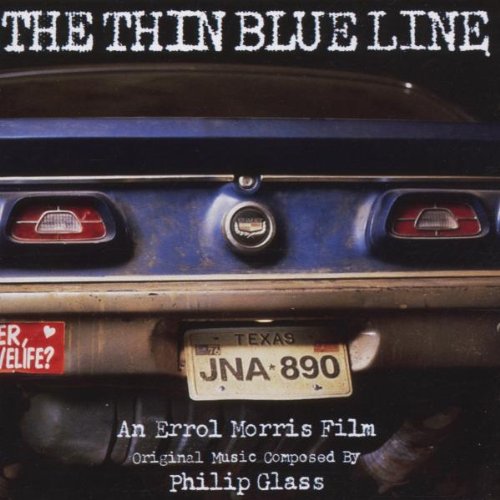
Few films can boast that they helped right a wrong, shone a light on institutional failings and redefined the way documentary investigation would look and feel forever- The Thin Blue Line did all these things.

On the evening of 28th November 1976 Dallas policeman Robert W Woods was shot and killed during a traffic stop. After an extensive search for his killer, 28 year old
Randall Dale Adams, who maintained his innocence, was arrested, tried and sentence to death. Years later documentary-maker Errol Morris would meet Adams whilst doing some preliminary research into another topic. Struck by Adams’ story Morris started looking into the case ultimately changing his documentary topic.

What resulted was not only a deft blow to the procedures of law and its pre-existing prejudices, but a seminal piece of documentary filmmaking. With its use of multi-narrative reconstructions, detailed interviews with all the participants – from investigating officers to prosecution witnesses, coupled with its noir aesthetic and
Philip Glass’ eerie soundtrack, The Thin Blue Line has become a staple of young documentarians’ education.

This documentary was released in 1988, in 1989 Adams was brought before the Texas Court of Criminal Appeals, where the D.A. declined to prosecute the case again. Adams was freed after 12 years in jail, some of that time spent on death row. Morris’ film directly impacted on Adams’ freedom- his investigation included a confession from the real gunman- who had gone on to commit multiple crimes.

Images 1,2,3

Full list published on Trespass

Sunday, September 19, 2010

Please Give


Looking at the lives of the middle class in NYC, this quirky, character-driven film is an excellent example of American independent cinema. Writer/director Nicole Holofcener (Lovely & Amazing, Friends with Money) gives us a story of dissatisfied New Yorkers, who while they don’t really have that much to complain about are oddly captivating with their neuroses and navel-gazing.

Please Give stars queen of the indie flick Catherine Keener (Synecdoche New York) as Kate, co-owner of a trendy second-hand furniture store with husband Alex (Oliver Platt, Frost/Nixon). The couple have an awkward teenage daughter Abby (Sarah Steele), who is going through some self-image issues. Together they live in an apartment next door to the elderly Andra (Ann Morgan Guilbert), a woman too old to care about manners and social graces. Andra’s granddaughters Rebecca (Rebecca Hall, Vicky Christina Barcelona) and Mary (Amanda Peet, 2012) are her only visitors, mainly Rebecca, a sweet-natured radiologist. Beautician Mary is pretty verbal about her dislike of her grandmother and doesn’t feel the same obligation that keeps her younger sister coming back.


These people’s lives interact and intersect because Kate and Alex have bought Andra’s apartment and are waiting for the old lady to die before they can knock through, a morbid connection that makes the couple feel obliged to be a part of Andra’s life. This odd atmosphere of selfishness and guilt permeates the film. Kate’s feelings of ambivalence about her store’s vulture-like profits from deceased estates, begins to weigh on her conscience. She increasingly overcompensates by trying to give generously to homeless people and by getting involved in community projects, which she is just not cut out for.

There is not a huge amount of plot to
Please Give, with the film’s interest coming from the character’s relationships and their inner-sense of vulnerability. Keener is always intriguing to watch on screen and Platt is a good counterbalance to her emotionally torn character. Nearly all the characters walk the tightrope between likeable and unpleasant; especially good is Peet, whose Mary is happy to put her feelings before anyone else’s. Rebecca as the put upon self-sacrificing sister has a less meaty role, but the world of mammograms she inhabits is an unusual and interesting film landscape.


Holofcener looks at middle-class guilt through a female prism, giving us a rather satisfying character study.
Please Give isn’t laugh-out-loud funny, it is witty and clever-a pleasing tale where not much happens, but spending time with the film’s characters is enough. The script is invested with a real sense of catharsis, making the film more upbeat than it first appears.

Images 1,2,3

First published on Trespass

Friday, September 17, 2010

Rising Star Emma Stone on getting an A in Comedy

In the vein of 90s hits like Clueless and 10 Things I Hate About You high-school comedy Easy A offers both a modern interpretation of a classic story and an intelligent teen Film. With a distinct 21st Century twist on promiscuity the film is loosely based on Nathaniel Hawthorne’s 1850 classic The Scarlet Letter. In Hawthorne's novel, the central character, Hester Prynee lives in 17th Century puritanical Boston. When Hester commits adultery and has another man’s baby, she is ostracised by her community, who force her to wear a scarlet letter A. In Easy A, Olive Penderghast (Emma Stone in her first leading role) attends a high school with a strong teen abstinence group who are outraged when she pretends to lose her virginity. As the school’s rumour mill goes into overdrive Olive embraces the increased social recognition, branding herself with a red letter A.

What attracted Stone to the project? “I work in a business that is so fuelled by rumours and the rumour mill, and what people think about you without ever really getting to know you. So it’s interesting to explore someone who goes the other way; most people spend their time denying what isn’t true, but Olive takes it to the other extreme and decides to become this caricature of what the rumours have said about her and fuels it herself.”


Olive is a clean-cut teenager who flies under the social radar at school- until she pretends to sleep with her gay friend Brandon (Dan Byrd), who is being bullied. The ruse brings Olive newfound poularity and a chance for financial gain. Stone explains that- “[T]here’s really the sense of wanting to help someone that needs it and [she] is just trying to survive high school as well. So I think it’s a mix of wanting to see what notoriety feels like- she’s not a martyr.” Stone also saw a little of her own personality in the character. “I loved playing Olive because she’s not too far off from my own sarcastic self, with her verbal diarrhoea.”


Easy A gave Stone the opportunity to work with some impressive names including Patricia Clarkson (Cairo Time) and Stanley Tucci (The Devil Wears Prada), who play her parents. “I had no idea that Patty was so kooky; she was always dancing and nuts, and completely justified why Olive was the way she was. I was so grateful to her for that. And Stanley is just unbelievable; shooting with them was the best three days ever. I’m kind of a walking sponge when it comes to working with actors I admire.”


Stone, who made her film debut as Jonah Hill's love interest in the 2007 smash hit Superbad, has a flair for comedic roles. “I watched a lot of comedies when I was a kid and didn’t really connect the dots but then they put me in a school play when I was little and I thought, ‘Wow this is really fun’, and then I really got some kind of bug after seeing The Jerk and Planes, Trains and Automobiles. I was like, ‘I want to go into comedy.’”

In Easy A Olive’s new social status at school doesn’t come without its critics. Amanda Bynes (She’s the Man, Hairspray) plays Marianne, Olive’s absentince preaching nemesis. Appalled by Olive’s behaviour, Marianne plots to have her thrown out of school by spreading malicious rumours. Although it’s a comedy Easy A also looks at the serious issue of bullying- especially its topical online aspects. Stone feels there is an important message for the film’s audience. “There are so many questions in this day and age about bullying and about cyber bullying and kids that are literally taking their own lives because of rumours started about them and crap on the internet that horrible kids are saying. So if people can take anything from this it is that the people who are bullying you are the insecure ones. And what you are doing is not wrong. They are just asses, and if you can deal with them, you’ll emerge a stronger person.”


Along with Superbad, Stone is also known for her role as savvy Wichita in popular horror-comedy, Zombieland, alongside Jesse Eisenberg and Woody Harrelson. Easy A is set to propel Stone into the leading-lady stratosphere- is she ready for the increased attention this will bring? “I have a very liveable life compared to a lot of people my age who do what we do, like Kristen Stewart or someone. I think it’s terrifying. Talking to people about the work you’ve done, that’s great, it’s part of the job, but to think of someone being outside your house, that freaks me out. So I guess I’m not prepared at all!”

Stone has plenty of projects lined up, including a change of pace. “I get to go to Mississippi to shoot this movie called The Help, which is based on this incredible book. It takes place during the Civil Rights movement in the ‘60s, is set in the deep South and is very different from what I’ve done before. It’s my first ever non-comedy.” Fans of Stone’s comedic talents needn’t fear- “I recently finished Crazy, Stupid, Love with Steve Carell, Julianne Moore and Ryan Gosling. I’m in a really good place right now.”

Images 1,2,3,4,5

First Published in The Brag 06/09/10