Showing posts with label Spanish film festival blog. Show all posts

Sunday, May 23, 2010

The Passion of Gabriel/ La Pasión de Gabriel

image

Father Gabriel (Andrés Parra) isn’t a model Catholic priest. He likes a drink and has more than an eye for the ladies, but he loves his parish and is fiercely protective of his parishioners. Set in a small village in the Colombian mountains, Luis Alberto Restrepo’s second feature film The Passion of Gabriel focuses on an imperfect character determined to stand up for what he knows is right.

Father Gabriel is a progressive priest, an enthusiastic participant in all forms of community life. He plays football with the village boys and helps raise funds to rebuild the village’s rotten bridge, a vital contact to the outside world. But the village is precariously located, with FARC guerrillas living in the surrounding jungles and encircling military forces, who view the villagers as rebel collaborators. The village residents are literally stuck between a rock and a hard place.

Showing the excesses of both sides of Colombia’s civil war, this film is only sympathetic to those forced to live in the middle. Father Gabriel is the ultimate man stuck in the middle- he is a priest, but he is in love with the beautiful Silvia (María Cecilia Sánchez). He is viewed with suspicion by both the guerrillas and the military and he must watch as the lives of village teenagers are harmed by both sides. His attempts to help young men recruited by FARC, and his efforts to warn the village children against the seductive lure of holding a gun are met with either annoyance or concern by the villagers, afraid of disturbing the fragile peace.

The Passion of Gabriel has an inevitability to its ending from the outset, but this takes nothing away from the compelling storytelling of co-screenwriters Luis Alberto Restrepo and Diego Vasquez Moncayo. The excellent central performance of Andrés Parra really brings the film’s powerful message home. The film asks, should you stand up and be counted or move with the prevailing powers? Father Gabriel is a refreshing character in his ability to be both flawed and honourable at the same time.

First published on the Spanish Film Festival Blog 21/05/10

Monday, May 17, 2010

Crab Trap/ El Vuelco del Cangrejo

image

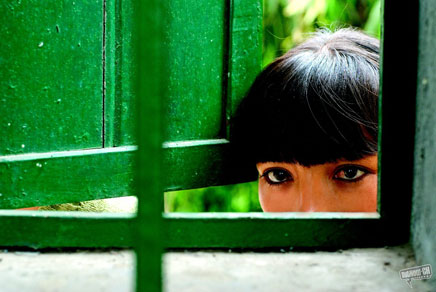
This year’s festival has a special section, Tribute to Colombia, showcasing the cinematic talents of this north-western South American country, whose geography gives it a mix of Latin American and vibrant Caribbean culture. Set in the isolated village of La Barra, Oscar Ruiz Navia’s debut feature film is a slow paced examination of this community through the eyes of an interloper, Daniel (Rodrigo Vélez). Seductive in its languid, simplistic style, Crap Trap lures you in, without ever letting you really get a grasp on the full story.

image

Daniel walks us into the seaside village, in need of a motorboat to get him out of the country. Daniel is only the second white man in La Barra, a black community. The first is El Paisa (the White Man, played by Jaime Andres Castaño), who is trying to turn the area into a beach resort. His incessantly blasting of reggaetón, through large speakers in front of his property, is slowly driving the community members mad. Daniel must wait for the fishermen, driven further and further out to sea to catch fish, to return before buying his way out on a boat. Daniel stays with Celebro (Arnobio Salazar Rivas), the informal head of the Afro-Colombian community, doing odd jobs to pay his way, saving his own money for the illusive escape vessel. Whilst waiting, Daniel is befriended by Lucia (Yisela Álvarez), a young girl desperate for him to spend some of his money at her mother’s makeshift restaurant.

image

With a similar visual style to Fernando Eimbcke’s Lake Tahoe (2008), Navia’s shots linger after the action/characters have moved out of frame. This technique is surprisingly affecting, with the landscape given time to exist on film in its own right. Navia’s fascination with this unique area of Colombia has obviously developed over time. He filmed a short film there previously called There Is a Brain at La Barra. Crap Trap, made using mainly non-professional actors from La Barra, is an excellent introduction to Colombian cinema for many Australians, lucky enough to catch this film at SPFF. Hidden under the surface, this clever mood piece contains vastly complex political, cultural and environmental issues.

First Published on the Spanish Film Festival Blog 14/05/10

Tuesday, May 11, 2010

Blank Canvas

image

Sydneysiders may remember the tragic death of dancer/choreographer, Tanja Liedtke in August 2007. German-born Liedtke was due to start as the Artistic Director of the Sydney Dance Company, when she was struck by a garbage truck whilst crossing the road. She was to take over from Graeme Murphy, who had held the role since the founding of the company in 1976. This shock loss reverberated through the dance company and the 2008 season ended up with a radical program. Three guest choreographers were each invited to create a new work starting from a blank canvas.

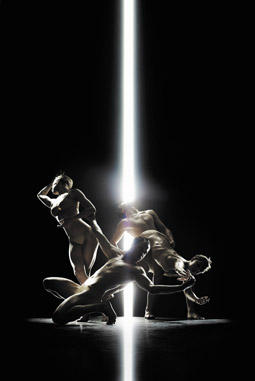
Spanish choreographer Rafael Bonachela was one of the three invited to Sydney, before ultimately being announced as the company’s new Artistic Director in 2009. In a fascinating and inspiring work of Australian documentary, Blank Canvas follows the Spaniard as he creates his first piece, We Unfold for the Sydney Dance Company.

Offering unprecedented access and insight into the renowned dance company, director Tim Slade and his team follow the creative process from start to finish. Bonachela begins with a beautiful piece of music from his creative collaborator, Italian composer, Ezio Bosso, Symphony No 1 ‘Oceans’ for cello and orchestra. Bonachela works with his dancers, organically discovering the movements that go with this music. Bonachela, who is a new Spanish Film Festival patron this year, is a delightful focus for the film, with his enthusiasm and tactile approach to both dance and the dancers he choreographs.

This film gives you an incredible insight into the art form of dance, not only the processes of developing a performance, but also the grace, strength and endurance of the human body. As a viewer it doesn’t matter if you are a dance novice, it is the world of Bonachela you are being taken into and even if the vocabulary of dance is new, the emotions and spectacular visions on screen transcend prerequisite dance understanding. As Bonachela says to his dancers in the film, ‘Just hold my hand and I will guide you through it”.

Using footage from rehearsals and performances as well as interviews with Bonachela, Noel Staunton (Chief Executive of the Sydney Dance Company), dancer Amy Hollingsworth (Bonachela’s second in command) and the other guest choreographers; this documentary shows the highs and lows for the dancers and the drive they all feel to be working at their best.


First published on the Spanish Film Festival Blog 08/05/10

Saturday, May 8, 2010

Milk of Sorrow


All by Women
is a new category introduced into the Spanish Film Festival’s program this year. This section’s aim is to showcase the work of Spanish and Latin American female directors, who have had a significant impact on world cinema. Claudia Llosa’s The Milk of Sorrow (2009) is an excellent example of why this addition to the program is so important; highlighted by the international recognition and success her Peruvian/Spanish film has received; winning the Golden Bear at Berlin (2009) and the nomination for Best Foreign Language Film Oscar (2010).

The film’s title, The Milk of Sorrow refers to the name given to the children of victims of state-sponsored violence in Peru (1980-1992). This period in Peruvian history saw intense fighting between The Shining Path, a Maoist influence group and the State, whose actions included the torture and rape of ‘suspected terrorists’, leaving a permanent stain on Peru’s history. The folk belief is that the trauma the mother suffered is transmitted to her children through breast milk. It is the impact of violence on the next generation that Llosa examines in her film, which she wrote as well as directed.

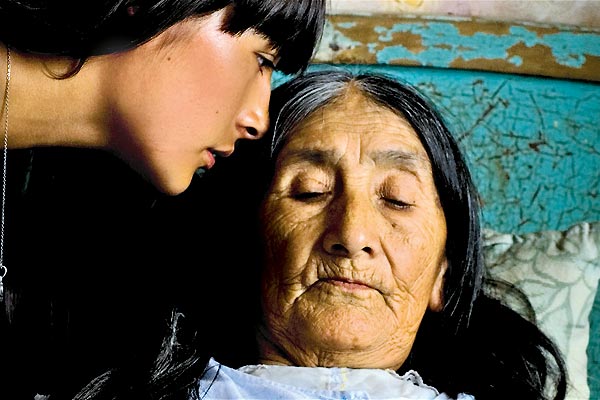
The film follows Fausta (Magaly Solier) who is a generation separated from the violence, but whose total existence has been infected by the trauma. Her mother (Bárbara Lazón) has sung her songs through her childhood about the sexual violence she endured. Labelled as one nursed on the milk of sorrow, Fausta’s constant fear (of being alone, of men and of being the victim of sexual assault) is seen by her extended family as the unavoidable conclusion to her mother’s suffering. When her mother dies Fausta, who has a beautiful singing voice, is forced to leave her safe haven and earn money to pay to transport her mother’s body to her home village.

Magaly Solier is absolutely mesmerising on screen. Discovered by Llosa for her first film, Madeinusa (2006), this actor/director combination creates magic on the screen. Llosa’s work, which combines dreamlike lyricism with social realism, is heightened by Solier’s amazing screen presence and her exquisite singing. While the subject matter of The Milk of Sorrow is at times hard-going, as you would expect from a film that is in essence a meditation on violence against women, the visual beauty brings out the charm of contemporary Peru, allowing the audience to both consider the context of the film and appreciate the stunning cinematography. The festival program has said it best - ‘An unmissible artistic highlight of the Festival.’

image

First published on the Spanish Film Festival Blog 03/05/10

Saturday, April 24, 2010

Spanish Film Festival- Preview

image

Now in its 13th year, this celebration of Spanish Cinema is starting in Sydney on the 5th May, with Canberra, Melbourne, Adelaide and Brisbane to follow. Showing more than 40 films this year’s festival has something for everyone. With dramas, comedies, documentaries and children’s films; from Spanish speaking countries like Chile, Uruguay, Peru, Costa Rica and Nicaragua; with performances from beautiful stars like Rachel Weisz and Penelope Cruz and showcasing the talents of acclaimed directors such as Alejandro Amenábar and Fernando Trueba- deciding which films to go see is going to be tough.

The Milk of Sorrow/ La Teta Asustada (Claudia Llosa, 2009) Peru/Spain

image

This 2009 winner of the Golden Bear at Berlin and Oscar nominated film was written and directed by Peruvian, Claudia Llosa. The film stars the mesmerising Magaly Solier (from the depressingly under seen Altiplano) as Fausta, a young woman haunted by her mother’s suffering. Fausta is said to have been nursed by the ‘milk of sorrow’, a title given to children whose parents were victims of the former terrorist regime in Peru. Combining social realities of contemporary Peru with the director’s magical realism, this film promises a truly exquisite cinema experiences.


The Dancer and the Thief / El Baile de la Victoria (Trueba, 2009) Spain

image

This year’s festival is paying tribute to Spanish director Fernando Trueba, whose back catalogue includes Calle 54 (2000) and Oscar-winning Belle Epoque (1992). Headlining this section is his latest film The Dancer and the Thief, a heist film adapted from a novel by Antonio Skármeta. Set in post-dictatorship Chile, the film follows the exploits of two ex-cons released during a national amnesty for non-violent offenders. Starring Argentine actor Ricardo Darín (Nine Queens and 2010 Oscar winner El Secreto de sus Ojos) and young Spanish actor Abel Ayala as the daring criminals, who plan to steal the millions Pinochet amassed during his Presidency.

Trueba will be attending some of his films’ screenings in Sydney, Melbourne and Canberra for Q&A sessions.


Agora (Alejandro Amenábar, 2009) Spain

image

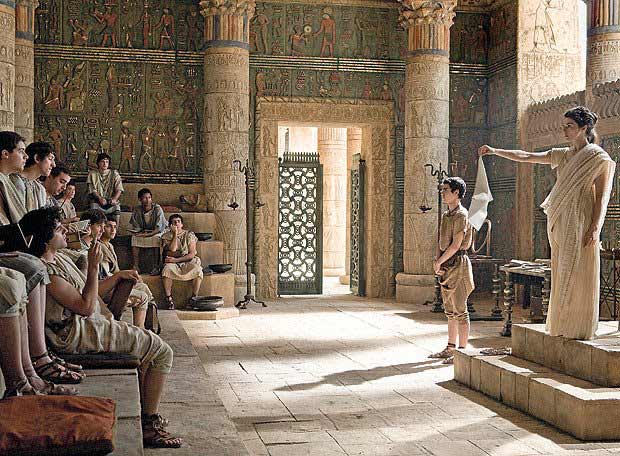
Screening on Closing Night, Agora is a big budget English language film from the director of The Others (2001) and Oscar-winning The Sea Inside (2004). Amenábar wrote, as well as directed, this European smash hit which stars Rachel Weisz (The Constant Gardener, The Lovely Bones) as Hypatia, an Alexandrian Astronomer. Set in 391 A.D. Alexandria where violent religious upheaval is causing chaos in the Roman Empire ruled city. Under siege, Hypatia and her disciples fight to save the ancient wisdom held inside the city’s famous library. Oscar Isaac (Balibo) and Max Minghella (soon to be starring in David Fincher’s The Social Network) play the men competing for Hypatia’s love. The highest grossing film in Spain for 2009, Agora won six Goyas (Spain’s equivalent of the Oscars) including best original screenplay and best cinematography.


Case 11.227 Colombia
/ La Historia que no Contaron (Azoye O’Shanahan, 2009) Columbia


Documentary filmmaker Azoye O’Shanahan follows Erika Antequera as she returns to Columbia, 20 years after the murder of her father, José Antequera, to find out the hidden reasons for his death. José Antequera, the Unión Patriótica (UP, leftist Columbian Political Party) leader was killed on 3rd March 1989 in Bogota. The filmmakers’ research shows how many murders of UP members remain unrecognised, leaving a mark on the record of Columbia’s, the oldest democracy in Latin-American, history. The title, Case 11.227, is the name given by the Inter American Court of Human Rights to the investigation into political state-sanctioned assassinations of UP members. This part of Columbia’s tragic recent history remains unresolved, with figures for the number of murders still contested.


Bad Day to go Fishing
/ Mal Día para Pescar (Álvaro Brechner, 2009) Uruguay/ Spain

image

This comedy/drama follows Jacob van Oppen (Jouko Ahola), the former strongest man in the world, and his manager Orsini (Gary Piquer) as they travel small South American towns staging wrestling exhibitions and challenging the locals. Any challenger that can beat Oppen in a three-minute bout wins $1000. When Oppen and Orsini arrive in the small town of Santa Maria, the unusually enthusiastic welcome from the locals leads to trouble for the pair’s established set-up. This quirky film is a great insight into contemporary Uruguayan cinema.


Blank Canvas
(Tim Slade, 2009) Australia

image

This documentary looks at the Sydney Dance Company as it tries to deal with the shock death of its new Artistic Director, Tanja Liedtke. In 2008 Liedtke was killed in a road accident, she was just about to take on her new role at the dance company, her predecessor, Graeme Murphy, had held the role of Artistic Director since 1976. As a result Noel Staunton, Chief Executive of the company, engaged three internationally renowned choreographers to create one work each for 2008, starting off from a blank canvas. These guests choreographers were Aszure Barton, Meryl Tankard and Spaniard Rafael Bonachela, who went on to be named the company’s Artistic Director at the end of 2008. This English language film is narrated by Kerry Armstrong (Lantana, Oyster Farmer).


This preview is taken from my piece on Trespass