Showing posts with label Documentary. Show all posts

Saturday, February 26, 2011

Inside Job

We’ve all sat in the cinema terrified by a knife-wielding psychopath on screen, or a liver-eating genius. We’ve subtly tried to avoid looking as suspense grows and we know some sort of evil incarnation is lurking in the shadows waiting to pounce on a nubile Hollywood starlet. Horror films offer harmless thrills, the usual reaction after been frightened is laughter as we realise something rather inane has got the better of us just for a moment. However the new documentary Inside Job, which looks at the causes and consequences of the 2008 economic collapse, is truly terrifying cinema-viewing, and there will be no nervous giggling after watching this film.

Charles Ferguson the filmmaker behind 2007’s No End In Sight, which investigated America’s complete mishandling and lack of understanding of Iraq in the lead up to and during the first year of invasion, has taken on a humongous task. Using the 109 mins running time to try and understand and explain the reasons for the economic crisis and the roles that different groups played in the collapse, Ferguson conducts a series of interviews with Economists, Lobbyists, Advisors, Politicians, Bankers, Regulators and Journalists. Narrated by actor Matt Damon, the documentary examines the historical background and increasing deregulation of banking in the US, the criminalisation of an industry and the on-going problems and issues that are impeding any reform even after massive bailouts.

Christine Lagarde- The French Minister of Finance, Economic Affairs,
Industry and Employment

The wealth and greed of Wall Street comes as no surprise with the obvious villains of the piece being companies like Goldman and Sachs, Morgan Stanley and Bear Stearns. By now most of us understand that the root cause of the recent stock-market crash has to do with deregulation, and that the subprime mortgaging system and something called ‘derivatives’ led us to the brink of an economic Armageddon. But as the film delves deeper into banking and investment practices and the use Credit Default Swaps (CDS) the true ethics of modern banking are revealed. Watching this doco you feel first angry then afraid. You certainly never fully appreciated the immense greed that permeates not just the banking institutions but that has also corrupted many of those who are meant to keep checks on the industry and the academics who are suppose to advise and lead it.

Robert Gnaizda- General Counsel and Policy Director of the Greenlining Institute in Berkeley

Thankfully for those less economically-minded the film gives succinct explanations of complicated financial practices, without making you feel like you are being talked down to. Ferguson is a consummate interviewer and while he has final editing powers, many of his more hostile interviewees fall prey to their own egos. More often than not it is what they won’t and don’t say that proves to be the most telling.

Barney Frank- Democratic Representative for the state of Massachusetts

Offering a comprehensive understanding of the financial meltdown and its causes, Inside Job is a highly accomplished documentary. Unlike Horror movies where you can remind yourself it isn’t real, it is hard not to leave this doco with a sense of dread, because those responsible for the World’s recent economic woes are still in the driving seat and despite the political promise of regulations, little to nothing has really changed.

Images 1,2,3,4

First published on Trespass

The Red Chapel


In the centre: Simon Jul Jørgensen and Jacob Nossell

The first film up in the 2011 program is highly original Danish Documentary, The Red Chapel. Filmmaker Mads Brügger’s gonzo project won the World Cinema Jury Prize at the 2010 Sundance Film Festival. Taking two Danish-Korean comedians to one of the world’s most restrictive dictatorships, Brügger’s aim was to expose the true nature of North Korea’s oppressive and ruthless regime. Brügger travels with Simon Jul Jørgensen and Jacob Nossell, both of whom were adopted from Korea as infants, to North Korea posing as a small, socialist Danish theatre group named The Red Chapel. The group and accompanying camera crew are given permission to enter the usually closed off country under the pretext that they will give a performance encouraging cultural exchange.

The documentary follows the group developing a comedy show in ‘collaboration’ with their minders and assigned Korean theatre director, whilst being given the ‘official’ sightseeing tour of Pyongyang. As pressure increases to please the state-appointed guides, the moral ambiguity of the director Brügger comes into question as he increasingly ignores the protests of his companions.

Jacob, who was 18 at the time of filming is handicapped with spastic paralysis, is both the victim and hero of the film. Choosing to travel to a country that is accused of killing disabled children at birth, Jacob wanted to use the film to prove that he was as capable as anyone else. However both the official regime and Brügger had other ideas and want to use him for their own propaganda.

Jacob and director Mads Brügger with their minders at a peace rally

Funny, curious and outrageous in equal measures, The Red Chapel is much more than simply an exploration of a totalitarian regime, it is an exercise in the ethics of filmmaking.While this film is an example of incredibly brave documentary-making it is also a study in manipulation. The North Korean regime wants to manipulate the filmmaker, the filmmaker in turn manipulates his subjects. Brügger recognises his single-mindedness but does nothing to correct it, asserting that showing the truth behind the dictatorship’s façade is more important than the feelings of both Simon and Jacob. You also have to wonder whether anybody considered the potential consequences for the local people who they duped?

Brügger’s cunning coupled with unparalleled bravado sees him, Simon and Jacob undermining and mocking the regime in ways that are both outlandishly hilarious and insightful. This documentary is bold and brash and at times touches on the absurd as it explores North Korea.

It is one thing to assert that humour can subvert political oppression, it is quite another thing to prove it. This truly is a film that has to be seen to be believed.

Images 1,2

First published on Trespass

Tuesday, November 23, 2010

Josh Fox Interview

An interesting episode in the life of Josh Fox

Josh Fox, US documentary-maker and current mouthpiece of the anti-natural gas drilling movement, has been on what he calls “an exhausting and comprehensive” tour with his film, GasLand. Launching screenings with local grassroot organisations across America and then travelling to Australia for Q&As in Brisbane, Sydney and Melbourne, Fox’s role is one firmly stuck between filmmaker and activist. Tired but still obviously spurred on by the environmental damage he’s seen and the threat to his own home, Fox is determined to continue spreading the message of the film.

GasLand is part exposé, part personal travelogue. The project began when Fox received a letter from a gas company offering $100,000 to lease part of his family’s upstate New York estate for exploration. Instead of signing on the bottom line like many of his neighbours Fox- a theatre director and part-time banjo player- decided to investigate the natural gas industry. “I was in the middle of a raging debate in my area between people who wanted this development and people who didn’t, and I just wanted to find out who was right.”

At the outset of his journey Fox was oblivious to the extend of the damage that hydraulic fracturing (a process for drilling for gas) was causing across America. It was a trip to the town of Dimock, Pennsylvania (shown in the film) that spurred Fox on to action. Interviews with residents there revealed flammable drinking water polluted by chemicals involved in the drilling process and massive health problems caused by toxic emissions. Fox felt terrified.

“I came home [after visiting Dimock] and I couldn’t sleep for a month, I still can’t sleep sometimes when I think about it, because I feel the walls closing in and I feel like I might have to leave.” Indeed, Fox's greatest fear is that he may not ultimately be able to halt the drilling process. “Here I am down in the valley, a lot of the property up on the hill, to the north side is leased. My immediate neighbours to my left and to my right are not leased, but what if they sell their house and the next person leases? … Even if they just drill the properties up on the hill, all those toxic emissions, and I know what they are, are going to waft down and collect in the valley.”

Watching GasLand it is hard not to feel outraged and angry. The film shows how gas companies in the US have been allowed to by-pass environmental laws. But despite all of his alarming and depressing findings you never see Fox angry in the film, which is surprising. “I think I am in shock myself a little bit about that, I think I am really deeply angry, I don’t think that is the way to express it though.” Fox pauses before continuing “Here is the thing, I think you have to leave space for your audience to make up their own mind… GasLand is a series of questions, put forward from a reasonable perspective, and it is in the audience’s hands to figure out what they need to do or what they think. You’ve got to come charging in at the end of the movie, not me, I’m already charging.”

Converting audience outrage into action isn’t easily done, but this filmmakers isn’t shy about pointing the way. “I think people have to be in the streets protesting about this, in the major cities. I think you have to have, at the locations, civil disobedience. The popular opinion has to turn and say ‘no, we are citizens of this country and we really want to examine this before industry comes in and decides to buys out our continent and our government’. At the beginning of the process I was really interested in preserving my land and my house, now the most important objective to me is to move the Earth towards renewable energy. Its about all of us investing in the great change that is to come, which is to get off fossil fuels. And natural gas is dirty just like fossil fuels.”

Perhaps unsurprisingly, Fox has attracted a smear campaign determined to discredit both him and the film. “A lot of people have said ‘hey you are getting to them, they’re attacking you’. But it sucks. Here is the thing that bothers me about it, what they [gas companies] are saying is so obviously a lie, they are lying through their teeth. I would like to see journalists challenge them on their lies instead of me having to deal with it. When they come out and say ‘We’re not exempt from the Safe Drinking Act’ the rudimentary level journalist could just look it up and see they are lying. And if they try and put that question to me, the journalists should chime in and say ‘sorry we know you are lying’. That’s is the part of it that pisses me off, the fact that they are able to hit one spin cycle in the media and disrupt the conversation with something that is such an obvious untruth.”

Becoming the mouthpiece of a cause certainly doesn’t come without its problems, but Fox with his wry sense of humour, seems to be coping. “The film has put the human face on this issue, on gas drilling…For me it is a really interesting rollercoaster. Isn’t this an interesting episode in the life of Josh Fox, I wonder what will happen next?”

First published in The Brag 15/11/10

Images 1,2,3

Monday, June 21, 2010

Sydney Film Festival- Teenage Paparazzo

image

Teenage Paparazzo (USA)

Adrian Grenier (of Vince Chase Entourage fame) was fascinated when one night, amongst the usual paparazzi circus he spotted blond-haired, braced-toothed youngster, Austin Visschedyk, snapping away. Grenier sought out the 13 yr old photographer, deciding to make a film about the teenage paparazzo.

This documentary is really about the concept of fame in the 21st Century. Where Perez Hilton is both celebrity commentator and celebrity and stars such as Paris Hilton and Lindsay Lohan (all interviewed during the film) seem to almost exist because of the paparazzi gaze.

While Grenier’s aim as filmmaker is to investigate this child paparazzi phenomena, Grenier the celebrity seems intent on turning the tables on the paparazzi and focusing the camera on them; a change the photographers don’t seem to enjoy or appreciate.

Using a mixture of celebrity interviews (Whoopi Goldberg, Eva Longoria Parker, Matt Damon, Alec Baldwin and the Entourage cast) as well as media insiders' insights and media commentators' analysis, Grenier’s film looks at why we have become a celebrity-obsessed culture.

The problem with this sort of social commentary is that Grenier is a celebrity and this impacts on not only the film, but also on its subject, Austin. Precocious to start off with, this coupled with ineffectual parenting and celebrity attention, Austin transforms into a monster during the documentary. With offers of his own reality TV show and Teen Vogue shoots, he decides that he too wants to be ‘famous’, like Grenier.

Unsurprisingly Grenier comes off well in his documentary, and is able to see that as much as he would like to think he was only observing and helping Austin, he has also exploited him. Like the photo-ops that Grenier fabricates for the film, it is hard to say to what extent this film, whilst very entertaining, is also a manipulation of sorts.


First published at The Brag 11/06/10

Friday, June 18, 2010

Sydney Film Festival- GasLand

image

GasLand (USA)

Josh Fox’s GasLand, winner of the Special Jury Prize for Documentary at Sundance 2010, joins a host of recent films designed to scare the bejesus out of their viewers; Inconvenient Truth, The End of the Line, Food inc.. Taking us on a pollution road trip, the very likeable documentary-maker tours natural gas drilling sites in 24 States across America, looking at the consequences of the under-regulated practice of
hydraulic fracturing on local water and air quality.

Fox’s documentary undertaking is a direct result of proposed drilling in his area (Catskills/Poconos region of Upstate New York and Pennsylvania). When a natural gas company offers him US$100,000 to lease his land, this puts Fox slap-bang in the centre of the issue. As the film’s protagonist he examines the environmental and social impacts of drilling.

His investigation takes him to many housholds affected by having drilling on their properties or in the vicinty. Their tapwater is flamable- infused with toxic chemicals used in fracing, victims live with chronic illness and their pets and livestock also suffer. Despite a wealth of damning evidence, natural gas companies remain wilfully ignorant and the government refuses to intervene.

This documentary explores how the industry was and is able to expand so quickly and importantly how laws were manipulated to expediate the flow of natural gases in an attempt to counterbalance America’s reliance on foreign oil. The film also highlights the tragic reshaping of the natural environment across America, with its beautiful mountainous landscapes dotted with drills and heavy machinery.

GasLand should anger, exasperate and shock its audience. Co-presented by the City of Sydney’s Green Campaign and the SFF, the problems revealed in this film may exist much closer to home than we would like. Click here
to see what is happening in our own backyard.

First published at The Brag 08/06/10

Monday, June 14, 2010

Sydney Film Festival: The Oath/ Waste Land

The Oath (Laura Poitras: USA)

image

Sometimes documentary films do all the work for you, they tell you what to think, who to trust and who to be angry at. Other films simply allow their subjects to unravel onscreen. The Oath is perplexing, because it seems to be leaving it up to the audience to decide- taking an objective look at its subjects, but really there are quite a few buttons being pushed.

Abu Jandal is a taxi driver in Yemen, who also happened to have been, at one point in time, one of Osama Bin Laden’s bodyguards. His brother-in-law, Salim Hamdam is a Guantanamo Bay prisoner and Bin Laden’s former driver. The film explores these men who met in 1996, and whose lives were at one point bound by Al-Qaeda, but are now very different. Morally the film seems to be suggesting that these two men’s positions should be reversed; Salim should be free with his wife and children, and the media-courting Abu, a man still heavily influenced by Al-Qaeda, should be in captivity.

The Oath is a really intriguing portrait of just one of its subjects, Abu, who seems completely out-of-touch with reality. Abu is shown tutoring young Yemeni man in the ideology of Al-Qaeda; but really the men are treated to celebrity Bin Laden stories and inane moral musings about America, which they balk at as Abu scoffs down American made and owned soft drinks and confectionaries.

Salim’s story on the other hand is very under-explored, mainly because he seems to want nothing to do with the documentary. While his captivity is given plenty of screen time, his words are read during the film in voice-over and it is never made clear, who is speaking and whether these sections are directly from Salim, or have been taken from letters, he may never had intended for public consumption. As documentary-maker, Laura Poitras covers his trials and the perversion of American laws that keep him imprisoned, the film’s ‘heroes’ come out loud and clear as Salim’s American military legal defense team, who also happen to be the most straightforward characters in the film.

For all its faults, The Oath is fascinating, but as a viewer you are left with many questions about the films subjects. Given Salim’s reluctance to be part of the film, and Abu’s desire to be seen and acknowledged, the film is heavily skewed towards the charismatic attention-seeker. Who is Abu really? He is such a contradiction in terms, his posturing throughout the film switches from jihadists to reform criminal, is he really anything more than a born performer?

image


Waste Land (Lucy Walker: UK/Brazil)

image

This documentary from Lucy Walker (The Devil’s Playground) and co-directors João Jardim and Karen Harley follows renowned Brazilian artist, Vik Muniz as he returns to Brazil from his adopted base of NYC. Having found success and financial security in the States, Muniz has come to a point in his life where he wants to give back. The place he chooses to start, is in Jardim Gramacho on the outskirts of Rio de Janerio, where 3000 people work as pickers/catadores on the largest landfill in South America. Stigmatised by the type of work they do, the pickers have developed their own community around what is the vital role of sorting recyclables from the 7000 tonnes of daily waste. Trapped by poverty, for most this is a job they have held since childhood, and the only viable alternative to the drugs trade and/or prostitution.

At the beginning of the film, Muniz asks if someone’s life can be transformed through art, and the journey this documentary takes in answering this question is both inspiring and compassionate; highlighting the strength of the human spirit and the potential beauty of the things society throws away, both people and garbage. The relationships that develop between Muniz and the chosen pickers for his art project, far exceeds superficial tags of artist/subject and benefactor/ recipient, making this film a joy to watch.

Waste Land introduces us to some of the catadores who participant in Muniz’ mix media project, these fantastic characters include; Jião, the passionate president and founder of the ACAMJG (The Association for the Pickers of Jardim Gramacho), Isis the cheeky beauty with a flair for fashion, Zumbi who is trying to start a community library with the books he salvages, and the stunning mother of two, 18 yr old Suelem. The film peeps into their lives by invitation and the filmmakers don’t outstay their welcome.

Covering topics from concepts of modern art to environmental concerns, Waste Land , with its exquisite highs and lows, is a story made to be told by documentary. This truly wonderful film is not to be missed.

Saturday, May 22, 2010

Food Inc.


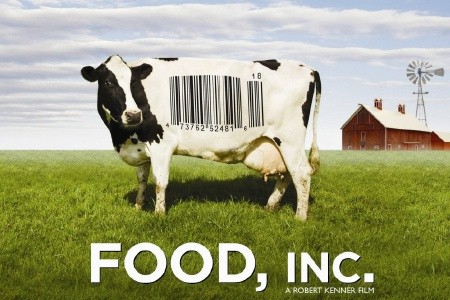
Warning- this film will make your next visit to the supermarket very fraught. Robert Kenner’s Academy Award nominated documentary raises questions about what we eat, and where it comes from, ultimately looking at unveiling the hidden truths of modern food production.

Narrated by activists and investigative journalists Eric Schlosser (author of Fast Food Nation) and Michael Pollan (author of The Omnivore’s Dilemma) this documentary covers vast territories from the complete industrialisation of farming and genetic ownership of crops, to concerns over governance and ever increasing corporate power. This is an issue film so don’t expect objective musing. The filmmakers want their audiences to change their lifestyles and they aren’t afraid to use shock tactics.

There is always a fear with big issue films that viewers will be overwhelmed by the breadth of the problems and will, in the end, do nothing upon leaving the cinema, and in some ways Food Inc. falls into this trap by trying to cover too much. Factory farming, FDA inaction, corn monopoly, farming subsidies, health concerns, cost of healthy food, consumerism and advertising, seed ownership, genetically modified food, migrant working rights, the list goes on and while these issues all link into one another it is a lot to take in, in a short amount of time (94 mins).

It is however hard to ignore footage of chickens grown to monstrous commercial proportions, unable to stand or the factory slaughterhouses that treat both their employees and products (animals) with inhuman detachment. Very personal accounts from Barbara Kowalcyk, whose two year old son, Kevin died from E.coli poisoning after eating a contaminated hamburger and seed-cleaner Moe Parr, whose livelihood has been destroyed by Agricultural giant Monsanto’s patenting practices, are poignant individual illustrations of the larger issues.

Food Inc. does what all good documentaries should; it makes you stop and think. This film is focused on America and its food industry and while it is easy to bury our heads in the sand and think of the problem as contained there, you have to wonder with Australian’s obesity statistics if we too don’t have an unhealthy food industry.

4/5

image

First Published in The Brag 17/05/10

Thursday, May 20, 2010

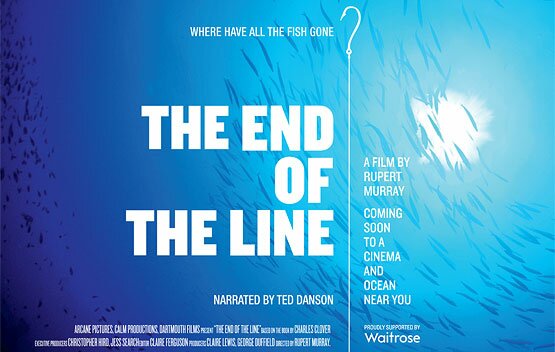
Interview with Rupert Murray- The End of the Line

image1 image2

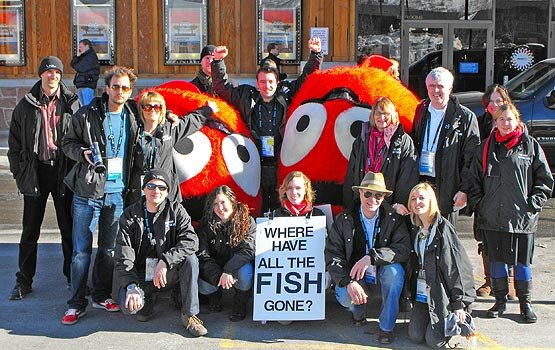
Rupert Murray’s documentary The End of the Line, is the first feature length film to examine the devastating impact of overfishing and the catastrophic consequences which seem to have gone almost unnoticed- until now.

“I had a sense that there was something terrible happening out at sea, there were a few sporadic newspaper articles filtering through to me here in London.” It was when Murray picked up a copy of investigative journalist, Charles Clover’s book, The End of the Line, that he realised this would be the topic of his next filmoverfishing, “The book is a mine of incredible jaw-dropping detail. I read it, and I suddenly realised the problem was much much worse than I’d imagined”.

This filmmaker’s passion for his subject gave him a very real desire to make a positive difference, “Everywhere we went [for filming] I was just bowled over by one shocking fact after another. I want the audience to feel that relentless onslaught of mind-numbing details and statistics and data. In a sense I want the audience to hear as much as possible, because the more you hear, the more shocked you’ll become, the more likely you are to change the way you do things.”

image1 image2

Murray and his team travelled from Alaska to Senegal, the Straits of Gibraltar to Tokyo, to show the enormity of the problem. When asked, Murray is quite blunt about the reasons why the plight of fish has been ignored for so long, “The problem is that fish are so alien to us that people find it difficult to get worked up about their demise. You look at them and you think ‘perfect food’. I find when I look at fish there is something primeval that says ‘that would be delicious on a bbq’. It is very difficult to get rid of that, I don’t know how you get rid of that, I mean the reason I made the film is because I love seafood.”

The film’s purpose isn’t to dissuade its viewers from eating fish, Murray really wants to illuminate the issue, so that we can start making informed decisions about what we eat, ‘Fish and the ocean are such a massive part of Australian culture yet how many people know how many local stock are overfished, and where the fish you actually eat comes from?”

While the film’s scientific experts predict an end of global fish stocks by 2048, ultimately there is a message of hope and individual power woven through the documentary’s narrative, with the experts stating that if fishing practices and regulations improve, the tide can be turned back before it is too late. Murray isn’t too optimistic yet- “This is a 360 degree issue, every way you look there is a massive problem; in any fishery, anywhere in the world, even the sustainable ones, even the ones doing the best practice, there are still massive issues.”

Watching The End of the Line you start to wonder why it has taken so long for this serious environmental crisis with huge food- shortage implications to be revealed, and it appears Murray feels the same way. With the voice of a man obviously frustrated by bureaucracy and weak political will, he makes it clear that you simply have to do what you can, “It would have been nice to have made this film ten years ago, when there was three quarters of the catastrophe, but unfortunately the world doesn’t work like that. It’s sad that we had to wait until it gets extremely bad before you can start really shocking people about it.”

image

First Published in The Brag 17/05/10

Saturday, May 15, 2010

Love, Lust & Lies

image

Australian Filmmaker, Gillian Armstrong is well-known for her strong, independent female protagonists (My Brilliant Career, Oscar and Lucinda), but her interest in the female experience extends beyond her feature films. Since 1975, Armstrong has been making a documentary series, following three Adelaide women; Diana, Josie and Kerry. First meeting the friends as fearless 14 yr olds at a community centre, Armstrong has documented their lives in five films, the latest being Love, Lust & Lies. This series of films is a comprehensive insight into the lives of Australian women and is surely an important historical record.

Love, Lust & Lies rejoins the women at 47, their lives altered over the years after failed relationships, marriages, children and grandchildren. While these women have been through many changes, what has stayed the same is their honesty and the courage to tell us their feelings, experiences and mistakes without sugar-coating or vanity.

image

There is an amazing bond between the director and her subjects, as they have all essentially grown up together. Armstrong was in her mid-twenties when she was commissioned by the South Australian Film Corporation to make a documentary about teenage girls, looking specifically at whether they were freer and more independent than their 60s counterparts.

Mutual trust and respect has grown over the years with Armstrong returning to the women’s lives at 18 (Fourteen’s Good, Eighteen’s better), 26 (Bingo, Bridesmaids and Braces), and 32 (Not Fourteen Again) and Armstrong’s approach and delicacy has allowed the women to feel safe enough to continue the project each time a new documentary is suggested.


Love, Lust & Lies
has been developed so audiences who haven’t been initiated into the series can still watch and enjoy, with footage from earlier films leading viewers into the latest instalment. This film almost feels like it should be compulsory viewing for teenage girls, with its narratives of love, the film beautifully illustrates generational consequences and ideas of responsibility through these engaging women’s stories.

First Published on Trespass

Tuesday, May 11, 2010

Blank Canvas

image

Sydneysiders may remember the tragic death of dancer/choreographer, Tanja Liedtke in August 2007. German-born Liedtke was due to start as the Artistic Director of the Sydney Dance Company, when she was struck by a garbage truck whilst crossing the road. She was to take over from Graeme Murphy, who had held the role since the founding of the company in 1976. This shock loss reverberated through the dance company and the 2008 season ended up with a radical program. Three guest choreographers were each invited to create a new work starting from a blank canvas.

Spanish choreographer Rafael Bonachela was one of the three invited to Sydney, before ultimately being announced as the company’s new Artistic Director in 2009. In a fascinating and inspiring work of Australian documentary, Blank Canvas follows the Spaniard as he creates his first piece, We Unfold for the Sydney Dance Company.

Offering unprecedented access and insight into the renowned dance company, director Tim Slade and his team follow the creative process from start to finish. Bonachela begins with a beautiful piece of music from his creative collaborator, Italian composer, Ezio Bosso, Symphony No 1 ‘Oceans’ for cello and orchestra. Bonachela works with his dancers, organically discovering the movements that go with this music. Bonachela, who is a new Spanish Film Festival patron this year, is a delightful focus for the film, with his enthusiasm and tactile approach to both dance and the dancers he choreographs.

This film gives you an incredible insight into the art form of dance, not only the processes of developing a performance, but also the grace, strength and endurance of the human body. As a viewer it doesn’t matter if you are a dance novice, it is the world of Bonachela you are being taken into and even if the vocabulary of dance is new, the emotions and spectacular visions on screen transcend prerequisite dance understanding. As Bonachela says to his dancers in the film, ‘Just hold my hand and I will guide you through it”.

Using footage from rehearsals and performances as well as interviews with Bonachela, Noel Staunton (Chief Executive of the Sydney Dance Company), dancer Amy Hollingsworth (Bonachela’s second in command) and the other guest choreographers; this documentary shows the highs and lows for the dancers and the drive they all feel to be working at their best.


First published on the Spanish Film Festival Blog 08/05/10

Tuesday, March 30, 2010

Trespass interview with Miles Roston

image1 image2


Music producer, documentary filmmaker and author, some people can just do it all and American Miles Roston is one of them. Currently residing in the Netherlands, Miles has travelled to many regions in the world, looking at issues such as HIV/AIDS, the impact of the religious Right in America and interreligious co-operation in Sierra Leone. With a long-term commitment to AIDs orphans, specifically in Sub-Saharan Africa, Mile’s films include, 14 Million Dream and Make it Real to Me.

Miles’ first book, Kevin’s Questions follows the experiences of a Kenyan AIDs orphan, Kevin Sumba, whom Miles met in Kisumu whilst making a documentary. In his second book Making a World of Difference, Miles has travelled around the world, speaking to people involved in community and grassroots organisations to find out how and why these people have chosen to help others. From a teacher, Suri, in Thailand, who organises home visits for poor students, to a couple, Wil and Flor, in Amsterdam, who run a children’s farm in one of the poorest suburbs, Miles’ book shows how people the world over have discovered the benefits of giving.

Miles was kind enough to have a chat with me during his recent visit to Australia about his latest book and what he’d learnt from his travels.


Your new book focuses on unsung heroes (some of whom are featured throughout this article), who have no similar backgrounds religiously, economically or culturally, what common traits did you find they had?

They would really look to see what the problem was, as opposed to assuming it. They would listen to what people themselves wanted, instead of assuming what people wanted. They all could use whatever skills they had, whether they were an architect, an event planner, or whether it was dentistry.

They were all can do people, social entrepreneurs to a certain extent. They had seen something and wanted to change it- to change the way things are in the world.


image

Ronni Kahn an Event Planner who founded Oz Harvest in Sydney in 2004. This charity rescues excess food from events and redistributes it amongst charities.


Why do people look to help others outside their own community or even their own country?

People exposed to needs or crisis outside their community, by witnessing something you can’t turn back. That happened to me with HIV/AID epidemic, I saw it, I had access that a lot of people don’t have, I couldn’t just stay home.

What were the biggest lessons you learnt from the people in the book?

This will sound silly- Life’s okay. Actually it is all okay. Suri talks about this thing- ‘the contentment of giving’.
Paul Pholeros, the Australian Architect, said ‘just giving it a go’.

Going out and making a difference and helping people, you actually get a lot back. It makes your life a lot better- I actually suspected that, but it turned out to be true. They are all really happy extraordinary people, who enjoy life in every different way. People in extraordinary situations do amazing things.

Mel Young, co-founder and President of the Homeless World Cup


Your book is very pro- Grassroot, community-lead projects, and seemingly anti- governments…

I have certainly seen governments not take care of their people. Take Kenya, where the ministers seem more concerned about their travel budget. There are real needs in certain places, but the politicians don’t seem very concerned what the people’s needs are.

If they are very concerned, the governments don’t have the best techniques to help the people. The reality is that I think people know what is best for them, themselves. There are certain things governments are stuck with. By nature they are bureaucratic, they want more power. The nature of any organisation is based on survival first.

Smaller organisations, the more grassroots, the faster they are able to adapt. They see what is really happening on the ground, because they are on the ground themselves.

You can see more of a difference when you do it yourselves, when you work with a grassroots organisation. You can feel the difference. You can see the impact you are making in people’s lives directly. That is also the inspiring part. Sometimes people who work for the UN or work for the government, they want the best, but they can’t see the affect of their work directly, so they get disheartened.

Sébastien Marot, founder of Friends International a charity based in Cambodia, that works with urban children and youth.


Why has the issue of HIV/AIDS become so important to you?

Because I got to see what it was like for children not to have parents. Their parents to have something that stigmatises them. In these communities it’s your own fault if you get HIV, you must have done something wrong. When the truth is, it is a disease.

The children have to grow up and they can’t understand why their parents died. And there are millions and millions and millions of them. I vowed, vowing is one of those big words, I kinda made a promise to talk about it, write the book, which I did with Kevin’s Questions, then a feature film, Make it Real to Me. I guess I just have to.

image

Chung To from the Chi Heng Foundation, a charity that helps AIDs orphans in China.


You’ve witnessed some of the best of mankind, but you must have seen some of the worst, how do you personally cope witnessing suffering?

Sometime you get a lot of sleep, sometimes it is actually really upsetting, you cry, which is probably the best thing to do. But then saying this I’ve seen the other side as well, amazing things, it’s that balance. I guess the highs are higher and the lows are lower. The more highs you see then the more lows you see, but you kinda get used to that.

You are often telling people’s stories for them, what responsibility does this put on you as a filmmaker or as an author?

First of all I have to get it right, and not impose. I have to please them, and I have to please myself. I have to make sure I don’t hurt people while helping them. So if there are details in the story that might get someone into trouble, legal trouble, I make sure they don’t get into legal trouble. That’s my responsibility.

I certainly can’t expose them then say thank you and walk off- I have to stay in touch with them. That’s a great thing; I get to be friends with all these people. I get a bigger and bigger family around the world, that’s nice to have actually.

image

Miles with Kevin Sumba, who is now studying as Monash University in Victoria.


What do you think your work has brought to your own life?

Now when anyone tells me something is impossible, I don’t believe them. I’ve had these amazing experiences where people will go to the ends of the earth to make things happen. Gandhi said “Don’t ask, Don’t get” he’s kinda right- if you can imagine it, then it’s possible, that’s true of fiction, that’s true of reality. Life gets more and more interesting and more exciting.


If someone was reading this interview, and they wanted to get involved and make a difference - where should they start and what should they do?

They should start right at home. First of all just start doing things a bit differently. Just a smile, if you’re in a situation when you’d normally get angry, don’t get angry, just smile, see what happens.

Research on the internet, take a look around, once you start opening the door and looking at the issues there is a lot of interesting stuff right under your noses. It’ll lead you down one track, to another track, to another track. It’s funny how one thing leads to another.


Check out the interview on Trespass where we are giving away 3 copies of Miles Roston's book, Making a World of Difference.

Wednesday, March 10, 2010

Somewhere Near Tapachula

There is something very heart-warming about this documentary’s simplistic and unflinching approach. Made by surfing enthusiasts and filmmakers, Stefan Hunt and Jonno Durrant (Surfing 50 States), Somewhere Near Tapachula shows how much can be achieved through human kindness and the curative power of surfing.

The film introduces Australian couple Pam and Alan Skuse, who went to Mexico in 2000 to volunteer for 12 months and ended up setting up their own orphanage. The Skuses’ original placement ended up closing 6 months after their arrival, and faced with the rehousing of the 7 children in their care, they decided to stay on and Misión México was born.

This refuge in Tapachula, Chiapas now homes 54 children and young adults all coming from troubled backgrounds. Tapachula is close to the Guatemalan border and is a gateway for drugs and people-smuggling from Central and South America. The documentary offers us some of the older children’s stories which they share with stark and moving honesty.

image

Read the full review at Trespass