Showing posts with label Sydney Film Festival. Show all posts

Tuesday, August 31, 2010

The Killer Inside Me


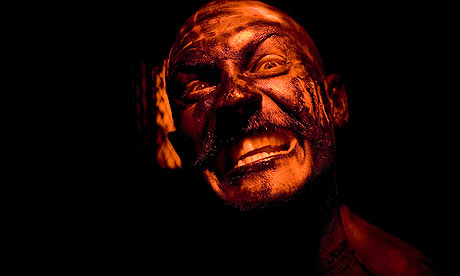
Anyone with even the vaguest interest in films is aware of the hoopla surrounding British director Michael Winterbottom’s (24 Hour Party People) first American film and the levels of violence it depicts. Unfortunately the discussions around The Killer Inside Me means that as a viewer you can never watch it without some prior knowledge and the influence of the strong opinions surrounding its content (consider not reading on if you have managed to avoid hearing anything thus far).

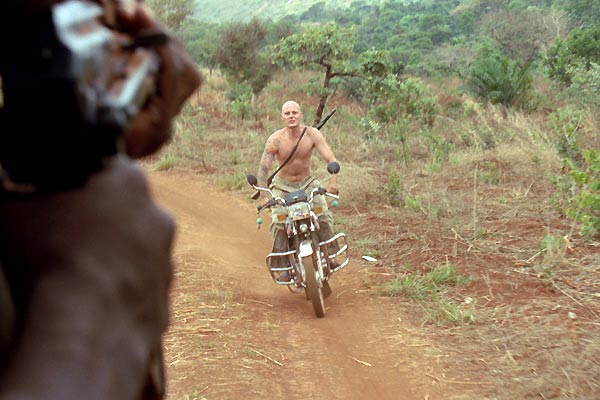
Based on a 1952 pulp novel by Jim Thompson (who also wrote The Grifters), the film follows Lou Ford (Casey Affleck), a sociopathic, small-town deputy sheriff, viewing the action from his perspective. With a loving girlfriend, Amy (Kate Hudson) and a seemingly contented life, Ford’s hidden nature comes to the fore when he is asked to run Joyce (Jessica Alba), a prostitute, out of town. When a blackmail scheme and the chance for revenge coincide, Lou’s psychotic behaviour is unleased on his unsuspecting friends and colleagues.

The thing that most film commentators have taken from The Killer Inside Me is its violence, which is graphically displayed and brutal to watch. There has been so much talk about this that you’re on tenterhooks watching the film. Ultimately anticipation robs the film of some of its power, dulling its confronting and shocking nature.

Winterbottom has defended his film against detractors, saying that violence on screen, especially realistically depicted, should disturb viewers. And he makes a good point, violence in films is rarely accompanied by any sense of its truly horrifying consequences. Perhaps more worrying to Winterbottom is the number of people who accuse the film of being misogynistic.

With a highly stylized noir aesthetic and impressive performances from the whole cast, including an excellent turn from Affleck, this is a good film, but really nothing more. It isn’t the profound look at human nature, or the unique take on the genre you might have expected from a director of Winterbottom’s calibre; but then again it isn’t the gratuitously violence, exploitation film that has been suggested either.

3/5


Images 1,2

First published in The Brag 23/08/10

Monday, August 23, 2010

Interview- Ruba Nadda

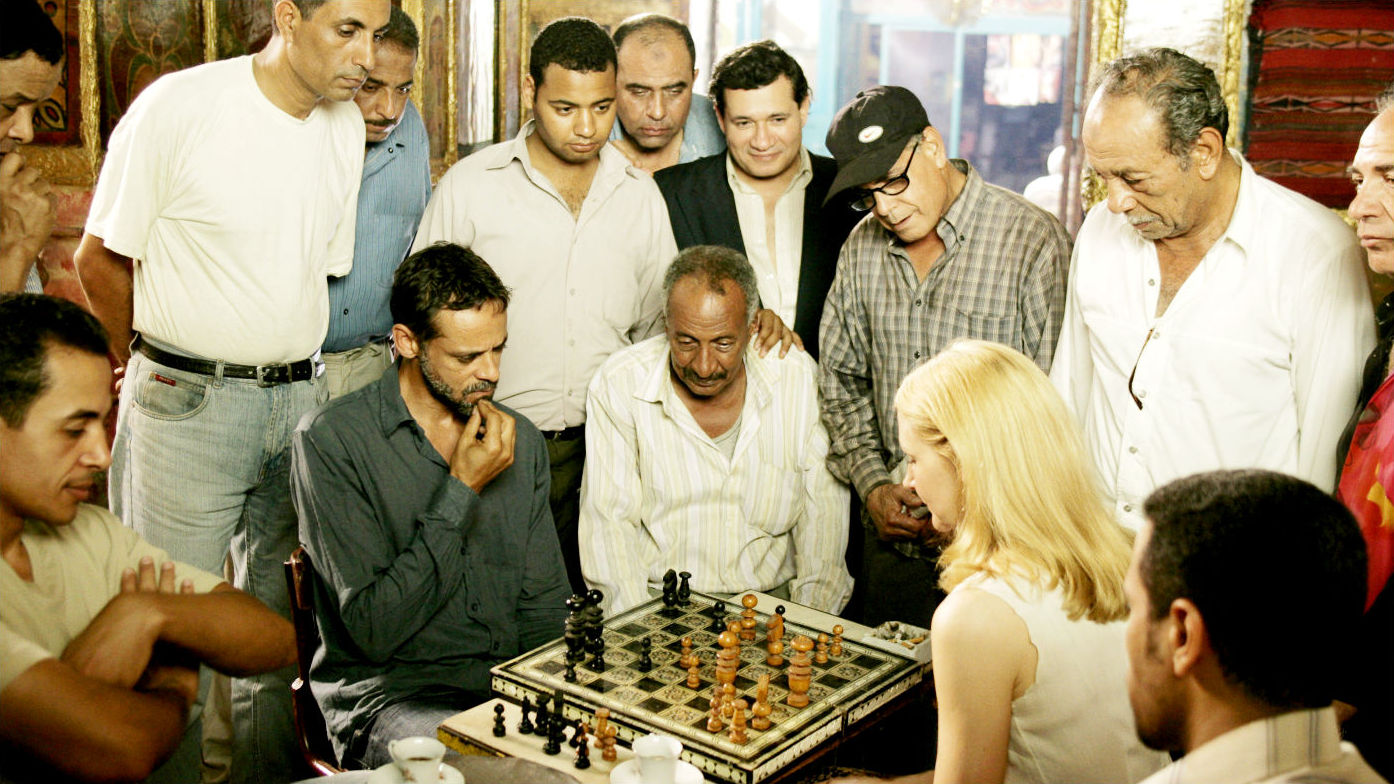
Canadian-Syrian filmmaker Ruba Nadda has been receiving rave reviews for her film Cairo Time. An old fashioned romance, the film shows off the talents of Patricia Clarkson and Alexander Siddig and the beauty of Egypt’s capital city. Ruba Nadda spoke to The Brag about working with her dream cast and the trials of filming with a censorship lady in tow.

In Cairo Time, Juliette (Clarkson) arrives in Cairo to find her husband has been delayed by work and has sent an ex-colleague Tareq (Siddig), a local, to meet her. As the film progresses a delicate romance plays out as Juliette discovers the delights of the city. This 'West meets Middle East' story has two unconventional romantic leads, a woman in her 50s and an Arab man. “I have always been obsessed as a filmmaker with trying to break down the misconceptions about the Middle East and Arab men in general”. But it was the age of Nadda’s female protagonist that caused the most worry-“I remember our financiers for the film trying to convince me to change the character and make her in her 20s or her 30s. I was really firm about having her being in her late 40s. In the movie she’s 50. For me it was really important to keep her at that age-I knew had it been a woman in her 20s, it wouldn’t have carried the same kind of weight.”

Cairo Time’s success is reliant on the central performers’ chemistry, and Nadda had an ideal cast in mind- “I wanted Alexander badly. I’d written the role for him, I’d been a huge fan of his over the years. And then I wanted Patricia. I just saw them together, I felt that they fit.” How did Nadda know these two actors who had never worked together would have the right energy? “the thing about romances is that it is all about the chemistry- either the characters have the chemistry or they don’t, and when they don’t they [romances] can be brutal. I winged it, I prayed that by casting these two people, and not having them audition in a room together, I prayed that they would have that chemistry. I remember filming the first shot and they were unbelievable, and so it worked. Making movies it’s kind of fate, it’s kind of like chance, sometimes you have to just go with it.”


Nadda can’t praise her stars enough- “the thing about Alexander and Patricia is that they are so experienced , they’re so amazing, so talented, when I had talked to them about their characters and the story, they really got it.... The thing about Patricia is that she is a powerhouse of an actress and so it was a lot of fun collaborating with her, she’s a very smart woman.”

Of course the other great character of the film is Cairo itself, a place that had captured Nadda’s imagination a long time ago “I always had Cario in mind. My parents are from Syria, they’re Arab. They took us [Nadda and her sister] on a visit when I was 16, to Cairo and it enchanted me so much that I just became obsessed with the city, and I basically pocketed the image of this amazing place, this atmosphere in my brain until many years later I thought I have to set a story here.”

Nadda’s script had specific famous locations written in, some of which had never been open to film crews before- the Pyramids and El Fishawis coffee shop. Nadda had to use her Syrian nationality to get access to these areas -“I would say ‘look I’m an Arab filmmaker, you have to give me permission, you can’t say no to me’”.

Nadda was similarly determined when it came to protecting her project against external pressures. “I was really committed to not altering the script because of the Islamic censorship. I was like ‘you’re not putting money into this movie, you’re not going to tell me how to shoot it’. My crew and I felt very strongly that if we got Cairo, we were not going to get pushed around. The script I wrote, I basically shot in the end. I am actually quite proud of that, because it was a real battle with the censorship woman, who was hired by the government and who literally signing every reel before they were being shipped back.” Nadda and her team had to come up with ways to circumnavigate their unwanted government tag-along- “for certain scenes I had to get rid of her because she wouldn’t have allowed us to film. So we had all these little ploys and plans for removing her when we needed to”.

Cairo Time with its lovely balance of visual wonder and character charm, has earned its director some long awaiting kudos at home. “I’ve been an outsider to Canadian film for many years, and all of a sudden with Cairo Time, it’s like I’ve finally been accepted into the kind of filmmaking clique here, it feels nice.”

Images 1,2,3

An abridged version of this interview was published in The Brag 16/08/10

Wednesday, June 23, 2010

Sydney Film Festival- Winter's Bone

My favourite film from the Sydney Film Festival 2010-

Winter’s Bone (USA)

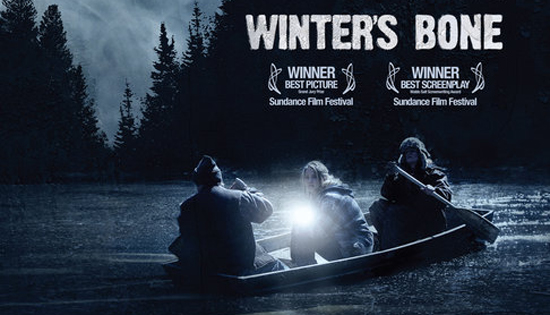
Based on a novel by Daniel Woodrell, a self-described writer of ‘country noir’, Debra Granik’s second feature film is simply magnificent. Winter’s Bone combines an excellent script, adapted by Granik and Anne Rosellini (who was also a producer), amazing performances and an incredible sense of place.

Set in the Missouri Ozarks in a community of Hillbillies, who make their money through the production of methamphetamines, Winter’s Bone is part- mystery, part family drama. The film’s protagonist, Ree Dolly (Jennifer Lawrence) is 17 years old and doing it tough. Her mother isn’t well and she has two younger siblings to look after. When the sheriff (Garret Dillahunt, The Road) turns up and tells her that her drug-cooking father has put their house up for his latest bond and unless he turns up to court later that week her family will lose everything- Ree is pushed into a dangerous course of action.

With massive pressure from her antagonistic extended family to toe the line, Ree has to navigate through social hierarchies and tense family histories, confronting older and meaner members of her community including her uncle Teardrop (John Hawkes, who stared in TV series Deadwood alongside Dillahunt).

Winter’s Bone's success is in part down to the extraordinary job it does in creating a strong sense of place. The Missouri Ozarks doesn’t look like anywhere we’ve ever been to on film before. The texture and details put into developing this drug-addled, rural backwater and making it completely believable, provides a perfect arena for the story to unfold.

The character of Ree Dolly is such a breath of fresh air. Not only is she a capable and strong female lead, she also isn’t a character who plays on her looks instead relying on her wits and bravado. Lawrence’s performance can’t be praised enough, she is remarkable. As is this film, Winter’s Bone is truly something to treasure if you get the chance to see it.

image

Monday, June 21, 2010

Sydney Film Festival- Teenage Paparazzo

image

Teenage Paparazzo (USA)

Adrian Grenier (of Vince Chase Entourage fame) was fascinated when one night, amongst the usual paparazzi circus he spotted blond-haired, braced-toothed youngster, Austin Visschedyk, snapping away. Grenier sought out the 13 yr old photographer, deciding to make a film about the teenage paparazzo.

This documentary is really about the concept of fame in the 21st Century. Where Perez Hilton is both celebrity commentator and celebrity and stars such as Paris Hilton and Lindsay Lohan (all interviewed during the film) seem to almost exist because of the paparazzi gaze.

While Grenier’s aim as filmmaker is to investigate this child paparazzi phenomena, Grenier the celebrity seems intent on turning the tables on the paparazzi and focusing the camera on them; a change the photographers don’t seem to enjoy or appreciate.

Using a mixture of celebrity interviews (Whoopi Goldberg, Eva Longoria Parker, Matt Damon, Alec Baldwin and the Entourage cast) as well as media insiders' insights and media commentators' analysis, Grenier’s film looks at why we have become a celebrity-obsessed culture.

The problem with this sort of social commentary is that Grenier is a celebrity and this impacts on not only the film, but also on its subject, Austin. Precocious to start off with, this coupled with ineffectual parenting and celebrity attention, Austin transforms into a monster during the documentary. With offers of his own reality TV show and Teen Vogue shoots, he decides that he too wants to be ‘famous’, like Grenier.

Unsurprisingly Grenier comes off well in his documentary, and is able to see that as much as he would like to think he was only observing and helping Austin, he has also exploited him. Like the photo-ops that Grenier fabricates for the film, it is hard to say to what extent this film, whilst very entertaining, is also a manipulation of sorts.


First published at The Brag 11/06/10

Sunday, June 20, 2010

Sydney Film Festival- Police, Adjective

image

Police, Adjective (Romania)

New Wave Romanian cinema has hit Sydney Film Festival, marking growing international interest and appreciation of Eastern European films. Along with the official competition pick, If I Want to Whistle, I Whistle (Florin Serban), the program also includes Police, Adjective/Politist, Adjectiv from writer/director Corneliu Porumboiu.

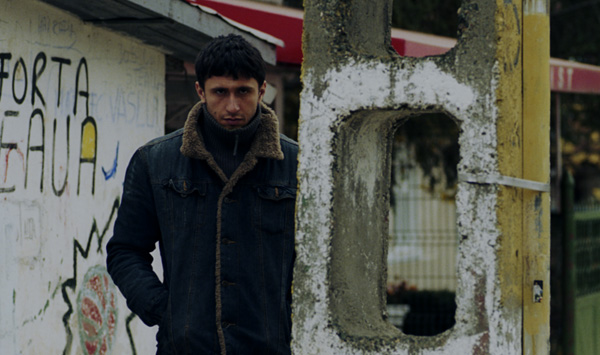
Winning the jury prize in the Un Certain Regard section in Cannes 2009, Police, Adjective follows the case of detective, Cristi (Dragos Bocur), a loner cop who works by his own rules, ignoring or avoiding his Captain (Vlad Ivanov). After the denouncement (a word with huge connotations in ex-communist countries) of one friend Victor, for being a drug dealer, by another- Alex, Cristi puts the boys under surveillance. But finding little more than a bit of recreational hashish smoking and a third female friend, Cristi is reluctant to arrest Victor, who could face a seven year sentence. Instead Cristi continuously trails the trio in an effort to find the real supplier.

The use of time in this film is very different from what we are accustomed to in English-language cinema. Especially in what is essentially a police procedural film. Porumboiu unapologetically uses long scenes of Cristi’s surveillance with no dialogue and often little movement.

It is however the character interactions between long, drawn-out scenes which make this film. Cristi’s conversations with colleagues, his discussion of semantics with his Captain and his witty repartee with his wife (Irina Saulescu) are all cinematic gold. The dialogue is funny, clever and insightful. You spend the time during the film’s tortuous stretches of silence hoping for more human interaction on screen.

Police, Adjective is both comedic and tragic, with the central character, Cristi’s modern understanding of police work, and the recent history of Romania’s oppressive state firmly in opposition. This is a police drama without guns, violence or urgency- instead a slow-burning tale about the power of words.

image


First published at The Brag 10/06/10

Friday, June 18, 2010

Sydney Film Festival- GasLand

image

GasLand (USA)

Josh Fox’s GasLand, winner of the Special Jury Prize for Documentary at Sundance 2010, joins a host of recent films designed to scare the bejesus out of their viewers; Inconvenient Truth, The End of the Line, Food inc.. Taking us on a pollution road trip, the very likeable documentary-maker tours natural gas drilling sites in 24 States across America, looking at the consequences of the under-regulated practice of
hydraulic fracturing on local water and air quality.

Fox’s documentary undertaking is a direct result of proposed drilling in his area (Catskills/Poconos region of Upstate New York and Pennsylvania). When a natural gas company offers him US$100,000 to lease his land, this puts Fox slap-bang in the centre of the issue. As the film’s protagonist he examines the environmental and social impacts of drilling.

His investigation takes him to many housholds affected by having drilling on their properties or in the vicinty. Their tapwater is flamable- infused with toxic chemicals used in fracing, victims live with chronic illness and their pets and livestock also suffer. Despite a wealth of damning evidence, natural gas companies remain wilfully ignorant and the government refuses to intervene.

This documentary explores how the industry was and is able to expand so quickly and importantly how laws were manipulated to expediate the flow of natural gases in an attempt to counterbalance America’s reliance on foreign oil. The film also highlights the tragic reshaping of the natural environment across America, with its beautiful mountainous landscapes dotted with drills and heavy machinery.

GasLand should anger, exasperate and shock its audience. Co-presented by the City of Sydney’s Green Campaign and the SFF, the problems revealed in this film may exist much closer to home than we would like. Click here
to see what is happening in our own backyard.

First published at The Brag 08/06/10

Thursday, June 17, 2010

Sydney Film Festival- The Disappearance of Alice Creed

image

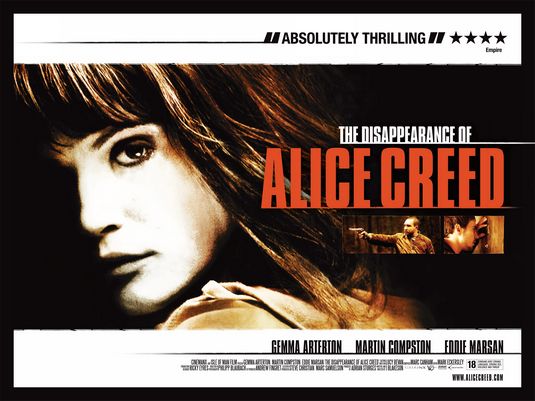
It is quite frankly nice to see Gemma Arterton (Clash of the Titans, Prince of Persia) not in a mythical-themed film. This stunning British actress has for the past few parts played little more than a prop for her leading men, with her obvious talent going to waste. In this British thriller, Arterton, as the title character Alice, is one of only three actors on screen, with her cast-mates Eddie Marsan (Happy-Go-Lucky) as Vic and Martin Compston (Red Road) as Danny, her two kidnappers. This film shows not only how good Arterton truly is, but also how much can be done with a small budget, committed actors and an excellent script.

The Disappearance of Alice Creed is tense and enthralling viewing. Set almost entirely in a flat with three rooms, writer/director J Blakeson plays a clever psychological game with his audience, utilising a basic crime premise. Rich girl, Alice is kidnapped and is held for a two million pound ransom by two ex-cons, who have meticulously planned the crime. But as with all of the best laid plans, in practice everything starts to slowly unravel, as the characters’ motivations become increasingly convoluted and entangled.

The fact that as a viewer you are unable to leave the flat, much like Alice, lends suspense to the film as you ponder what is happening outside. This heightened level of claustrophobia is intensified by the menace exuded by Vic and the jittery energy of Danny. Each actor gives as good as they get in this brutal, shocking and at times darkly funny film.

If you get the chance to watch The Disappearance of Alice Creed, which is J Blakeson feature debut, take it- you won’t be disappointed.


First published on The Brag 07/06/10

Sydney Film Festival- Moloch Tropical

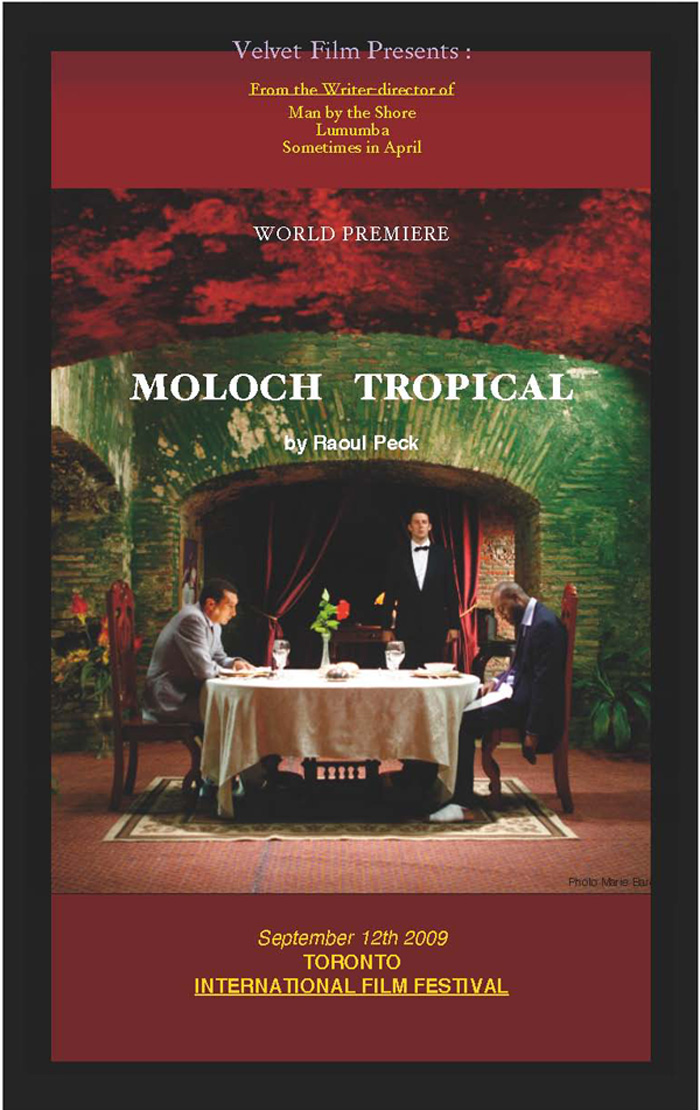
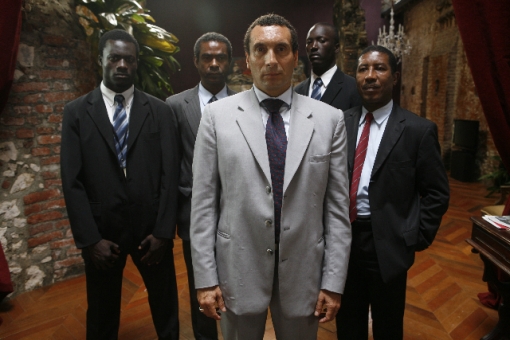
Haitian director Raoul Peck was at one time his country’s Minister for Culture, which makes watching his latest film Moloch Tropical, a scathing political satire, all the more intriguing. Covering a 24-hour period, which also marks Haiti’s Independence Day, President Jean de Dieu (French actor, Zinedine Soualem) is having a major meltdown. His people no longer want him in power, he is dangerously close to losing the vital support of America, he has a media personality to torture and he is severely sexually frustrated. Set in the stunning mountainous fortress of Citadelle Laferrière of Henri Christophe (a key figure in the 1804 revolution, who became King Henri I) this film critically looks at the perversion of power within the politics of modern democracies.


Although there are obvious similarities between Haiti’s first democratically elected President Jean-Bertrand Aristide and the central character, Jean de Dieu, this film’s criticism is not confined to the Haitian experience and also takes direct aim at American and European leaders.

The corrupting influence of power and the extent that political language can be manipulated are explored through Peck and Jean-René Lemoine’s biting script. The lengths that politicians go to to maintain the status quo is laid bare (at time literally) on screen. Although exaggerated beyond the point that the film could be read as a true account, its cast of players certainly have a disturbing basis in reality. Peck, who has accompanied his film to Sydney, asked Soualem to channel certain well-known politicians for different key scenes in the film; Clinton, Sarkozy, Berlusconi – these analogies come through loud and clear.

Moloch Tropical’s visual beauty is in sharp contrast to the grotesque nature of its characters. This film shows that when the gap between the theory of democracy and its practice is scrutinised, none of the players can escape untainted.


First published on The Brag 07/06/10

Wednesday, June 16, 2010

Sydney Film Festival- Cairo Time

Written and directed by Canadian filmmaker Ruda Nadda (Sabah: A Love Story), Cairo Time is a sumptuous movie-going experience, with two amazing leads, a beautiful location and a simple but engaging story. Patricia Clarkson (Vicky Christina Barcelona, Shutter Island) plays Juliette, a western outsider holidaying in Egypt. Juliette is meant to be meeting up with her UN employed husband, Mark (Tom McCamus) but he his held up in a Gaza refugee camp. Instead Mark sends one of his ex-colleagues and Cairo resident, Tareq (Alexander Siddig, Kingdom of Heaven, Syriana), to pick his wife up at the airport. From here what transpires is a tender romance between two very different strangers.

image

This gorgeously shot film (thanks to cinematographer Luc Montpellier), makes excellent use of the stunning architecture, both ancient and not quite so old, of Egypt’s capital city. This added to Cairo’s evocative landscapes- makes the film exceedingly good armchair-travel viewing. And for a little while it feels like perhaps this is all the film is going to bring. But thankfully the uneasy beginning, which relies a little too heavily on fish-out-of water scenarios, makes way for the heart of the story, which is a charmingly choreographed holiday flirtation.

Clarkson is one of those actors with a natural screen presence, and this film makes full use of her innate likeability. Siddig is a revelation; the British-based actor has undeniable charisma, making Tareq an enigma of sorts. It is credit to both central performances that the film’s central love story is both morally ambiguous and touching. The film’s superb soundtrack, which includes original music from Irish composer- Niall Byrne, enhances the story without interrupting what’s happening on screen. This added to the divine costuming (some of Clarkson’s clothes are to die for) makes this captivating film the full package.

image

First published on The Brag 06/06/10

Sydney Film Festival- The Refuge

image


François Ozon’s (The Swimming Pool, 8 Women) latest film Le Refuge is a beautifully subtle character piece. The unsentimental set-up is an almost perfect beginning for the film, which languidly unfolds around a delicate friendship between pregnant Mousse (Isabelle Carré) and Paul (Louis-Ronan Choisy), her dead boyfriend’s brother.

With a relaxed and non-judgemental eye, Ozon’s film explores themes of loss and rehabilitation through his central characters. Their back stories are limited, Mousse has obviously had an unconventional life, Paul is an outsider in a rich family. Their emotional connection is both detrimental and empowering. They could be good for each other, but are they too damaged to give each other the support they so desperately need?

Carré plays Mousse with a charming vulnerability and a lack of self-consciousness, a woman who kept her unplanned pregnancy out of curiosity. Choisy as Paul is quite literally gorgeous on screen, embodying compassion and confusion. With captivatingly understated and nuanced performances, these actors allow their characters to develop on screen, not wringing emotion out of what could be have been melodramatic roles.

Set mainly in a picturesque seaside village on France’s south coast, this film is a Gaelic gem. Not overpowering, the filmmakers pull few strings and refrain from manipulating their audience’s emotions. Le Refuge has a lovely dreamy quality, enhanced by strong performances and a simple but beautiful script, co-written by Ozon and Mathieu Hippeau.

image

First published on The Brag 05/06/10

Tuesday, June 15, 2010

Sydney Film Festival- If I want to Whistle, I Whistle/ The Wind Journeys

If I Want to Whistle, I Whistle (Florin Şerban: Romania)

image

There has been a lot of talk surrounding this film, in regards to the New Wave of Romanian cinema. With the arthouse success of films like The Death of Mr Lazarescu (2005, Cristi Puiu) and 4 Months, 3 Weeks and 2 Days (2007, Cristian Mungiu), this is the latest Eastern European film receiving international acclaim, winning the Silver Bear at Berlin this year.

This powerful and slow-burning film is part of the Sydney Film Festival’s official competition. Travelling to Australia with the film is its star, George Pistereanu and its producer, Daniel Mitulescu, who made the film with director, Florin Şerban, in a rather unusual fashion. Set in a jail for young men, If I Want to Whistle, I Whistle/ En cand vreau sa fluier, fluier used a cast largely made up of actual juvenile prisoners. Fourteen of George’s cast mates where playing roles they were all too familiar with.

The film follows the central character, 18 yr old Silviu (Pistereanu) in the days leading up to his release after a 4-year-sentence, when unexpected news from the outside sends the character on a desperate and downward spiral.

Filmed in a suitable handheld visual, the camera stays on Silviu almost continuously during the film, giving even his smallest facial movement or gesture huge currency on screen.

Pistereanu, who was still at high school during filming, is phenomenally good in what must have been an incredibly challenging role, not just emotionally, but physically. Also superb are Ada Condeescu as Ana, the student sociologist and object of Silviu’s affections and young actor (whose name I cannot find) playing Silviu’s brother, who is only in the film briefly, but who’s performance is heartbreaking.

This film and the story surrounding its conception are inseparable. After 3 months of casting, Şerban and his crew found 14 young inmates to participate in the film, and spend 2 months workshopping with them. Şerban has since set up an acting school to continue working with the film’s convicted actors- adding to the film’s success. That it is the 2nd highest grossing local film of the past 7yrs, is perhaps the greatest compliment to the cast and crew, as this is obviously a story which resonates with Romania’s youth.


The Wind Journeys (Ciro Guerra: Colombia)

image

South American filmmakers seem to have developed their own brand of magical realism. Incorporating spectacular landscapes, folklore and societal realities, these films weave beautiful stories out of harsh everyday lives and mythical tales, creating films full of fantasy and wonder.

The Colombian film, The Wind Journeys/Los Viajes del Viento from director Ciro Guerra fulfils this criteria. Following our two leads, accomplished accordion player Ignacio (Marciano Martínez) and would-be musician, Fermín (Yull Núñez) as they cross vast areas of the country, travelling from their village across mountain rangers, lagoons and deserts.

Ignacio is the owner of a horned accordion, which is said to have been won from the Devil himself. Whether the instrument is truly cursed or not, Ignacio sees it as the cause of his woes and is determined to return it to his teacher, the man who gave it to him. As he set off on his donkey, the teenage Fermín tags alone, in the hope of learning from the renowned musician so he too can become a juglar (travelling musician).

Guerra and his DoP, Paulo Andrés Pérez are responsible for this film’s stunning aesthetic. Making the most of the breathtaking scenery, filmed in more than 80 locations in Northern Colombia, the characters’ journey is often shown in majestic glory with sweeping wide shots, enhancing the natural beauty of each unique setting.

Each geographical location has an episodic quality, with each new setting providing a different adventure and musical influence. With accordion-offs (similar to rap battles), machete duels and drum baptisms, the stories interspersed along the arching narrative are embedded with mythical tones and folk sensibilities.

Ultimately The Wind Journeys is held together by the excellent central performances. Especially impressive is Núñez, whose facial expressions in moments of silence do so much to reveal the story’s darker undertones.

This film is truly a magical journey with jaw-dropping visuals and powerful performances.

First published on Trespass

Sydney Film Festival: White Material

image

French filmmaker Claire Denis’ (Beau Travail, 35 Shots of Rum) returns to Sub-Saharan Africa with White Material, a brutal and unflattering look at post-colonialism. Set in an unnamed country, with elements of Zimbabwe and Kenya’s recent history and similarities to Sierra Leone and Liberia’s civil wars, this film focuses in on one white family, more specifically one woman, Maria Vial (the always impressive- Isabelle Huppert, The Time of the Wolf) and her coffee plantation. Caught between the rebels and the Army, both who view the remaining white residents with disdain, Maria is determined to harvest the latest crop, ignoring the obvious and ever encroaching danger.

The happy façade that seems to exist between the Vial family and the larger black community, is quickly dissolved as the tension heightens. Despite urging from French forces, Maria refuses to leave, much to the disgust of her black workers, who have no way to avoid the approaching bloodshed.

White Material is both compelling and repellent. Maria’s irrational resolve and lack of concern for those around her, including her already unhinged son, Manuel (played superbly by Nicolas Duvauchelle) are frustrating to watch. It is hard not to shout at the screen to urge the characters to take a different journey, even though the inevitability of the story is displayed by Denis from the outset.

While Denis captures the beauty of the landscape with its sun-hazed colours, the camera’s jitteriness and jolts, which reflects the frenetic energy of the film’s content, soon outstay their welcome and ultimately detracts from the story, making the film physically hard to watch at times.

White Material engages in an important dialogue, tapping into the tragedy of child soldiers and the vacuum of power left in post-colonial African countries, especially those rich with natural resources. Unfortunately the high expectations (fairly or not) attached by this reviewer to the film are not entirely met. Despite excellent performances from its cast- including Christopher Lambert (Highlander) as André Vial and Isaach De Bankolé (The Limits of Control) as the rebel- Le Boxeur, the film lacks narrative structure and fails to give the characters the motivations needed to make their actions understandable. That said White Material establishes such a powerful sense of atmosphere that it’s still a cut above the vast majority of what is currently on offer at the cinema.

First published on Trespass

Monday, June 14, 2010

Sydney Film Festival: The Oath/ Waste Land

The Oath (Laura Poitras: USA)

image

Sometimes documentary films do all the work for you, they tell you what to think, who to trust and who to be angry at. Other films simply allow their subjects to unravel onscreen. The Oath is perplexing, because it seems to be leaving it up to the audience to decide- taking an objective look at its subjects, but really there are quite a few buttons being pushed.

Abu Jandal is a taxi driver in Yemen, who also happened to have been, at one point in time, one of Osama Bin Laden’s bodyguards. His brother-in-law, Salim Hamdam is a Guantanamo Bay prisoner and Bin Laden’s former driver. The film explores these men who met in 1996, and whose lives were at one point bound by Al-Qaeda, but are now very different. Morally the film seems to be suggesting that these two men’s positions should be reversed; Salim should be free with his wife and children, and the media-courting Abu, a man still heavily influenced by Al-Qaeda, should be in captivity.

The Oath is a really intriguing portrait of just one of its subjects, Abu, who seems completely out-of-touch with reality. Abu is shown tutoring young Yemeni man in the ideology of Al-Qaeda; but really the men are treated to celebrity Bin Laden stories and inane moral musings about America, which they balk at as Abu scoffs down American made and owned soft drinks and confectionaries.

Salim’s story on the other hand is very under-explored, mainly because he seems to want nothing to do with the documentary. While his captivity is given plenty of screen time, his words are read during the film in voice-over and it is never made clear, who is speaking and whether these sections are directly from Salim, or have been taken from letters, he may never had intended for public consumption. As documentary-maker, Laura Poitras covers his trials and the perversion of American laws that keep him imprisoned, the film’s ‘heroes’ come out loud and clear as Salim’s American military legal defense team, who also happen to be the most straightforward characters in the film.

For all its faults, The Oath is fascinating, but as a viewer you are left with many questions about the films subjects. Given Salim’s reluctance to be part of the film, and Abu’s desire to be seen and acknowledged, the film is heavily skewed towards the charismatic attention-seeker. Who is Abu really? He is such a contradiction in terms, his posturing throughout the film switches from jihadists to reform criminal, is he really anything more than a born performer?

image


Waste Land (Lucy Walker: UK/Brazil)

image

This documentary from Lucy Walker (The Devil’s Playground) and co-directors João Jardim and Karen Harley follows renowned Brazilian artist, Vik Muniz as he returns to Brazil from his adopted base of NYC. Having found success and financial security in the States, Muniz has come to a point in his life where he wants to give back. The place he chooses to start, is in Jardim Gramacho on the outskirts of Rio de Janerio, where 3000 people work as pickers/catadores on the largest landfill in South America. Stigmatised by the type of work they do, the pickers have developed their own community around what is the vital role of sorting recyclables from the 7000 tonnes of daily waste. Trapped by poverty, for most this is a job they have held since childhood, and the only viable alternative to the drugs trade and/or prostitution.

At the beginning of the film, Muniz asks if someone’s life can be transformed through art, and the journey this documentary takes in answering this question is both inspiring and compassionate; highlighting the strength of the human spirit and the potential beauty of the things society throws away, both people and garbage. The relationships that develop between Muniz and the chosen pickers for his art project, far exceeds superficial tags of artist/subject and benefactor/ recipient, making this film a joy to watch.

Waste Land introduces us to some of the catadores who participant in Muniz’ mix media project, these fantastic characters include; Jião, the passionate president and founder of the ACAMJG (The Association for the Pickers of Jardim Gramacho), Isis the cheeky beauty with a flair for fashion, Zumbi who is trying to start a community library with the books he salvages, and the stunning mother of two, 18 yr old Suelem. The film peeps into their lives by invitation and the filmmakers don’t outstay their welcome.

Covering topics from concepts of modern art to environmental concerns, Waste Land , with its exquisite highs and lows, is a story made to be told by documentary. This truly wonderful film is not to be missed.

Tuesday, June 8, 2010

Exit Through the Gift Shop


The elusive street artist, Banksy has made a documentary. Well maybe, sort of, it’s a bit more of a mockumentary, a piece of video art perhaps? Labelled as the ‘world’s first street-art disaster movie’ the subject of his film is vintage clothes shop owner turned street artist, Thierry ‘Terry’ Guetta aka Mr Brainwash.

An obsessive videographer, French-born Guetta lucked into the burgeoning street artist movement and specifically Shephard Fairey (of the Obama ‘hope’ poster fame) after moving to LA. He convinced Fairey and his fellow street artists, including renowned Bristol boy- Banksy, that he was a documentary-maker, allowing him full access to their furtive world. Over a period of years, Guetta amassed a huge amount of material showing the growth of the street-art movement, but what was he going to do with it all? And what happens when Guetta decides to give the street-art thing a go himself?


image

“I don’t know who the joke’s on, I don’t know if there is a joke” this line in the film, from Banksy’s promoter, is a pretty succinct summing of the film project as a whole. This film is a tongue-firmly-in-the-cheek look at the commercialisation of art, something that Banksy has been accused of doing by his detractors. It also considers the idea of the ‘celebrity artist’; Banksy’s artwork is hanging in the homes of stars such as Brad and Angelina, Christina Aguilera and Kate Moss. Then there are the important questions the film raises about creation and ownership.

Narrated by Rhys Ifans (Enduring Love) and with one of the best film titles in a long time, Exit Through the Gift Shop promises an amusing and intriguing examination of the current state of the art market. Documentary, mockumentary, piss-take or piece of modern art?- that’s up to you to decide.

image

First Published in The Brag 31/05/10

Wednesday, May 26, 2010

Women on Top- Interviews with Film Festival Directors

I have been lucky enough to work on a few film festivals in N.S.W over the last three years; I volunteered at the Sydney Film Festival (SFF) in 2008 and 2009, I have written for the Spanish Film Festival blog for the past two years and this year I have been working on the Dungog Film Festival. As well as getting to see how much time and effort goes into making these cinematic celebrations a success, I have also been inspired by the women who run them.

Clare Stewart of the Sydney Film Festival, Natalia Ortiz of the Spanish Film Festival and Allanah Zitserman spoke to me about their roles as Film Festival Directors, their passion for films, and the female experience in the Film Industry. This was especially generous as they all took time out during the run-up to their respective festival when they are at their most busy.


The most obvious question for all three women is, how do they define their role as a film festival director?

With the biggest festival to contend with, The Sydney Film Festival is now in its 57th year, Clare has been at the controls for four years,

“The role has many faces and is incredibly varied. I guess the critical part of my job really is the selection of the films for the festival and the overarching architecture of the guest filmmakers; choosing the guest filmmakers who will come to accompany those films.”

Both Natalia and Allanah founded their own festivals with the focus on the cinema closest to their own hearts, Spanish and Australian,

Running in five cities, The Spanish Film Festival comes to the end of its 13th year at the end of May. Natalia is hands on with every part of the festival,

“I reinvent the festival every year, by that I mean every year the program has completely different things to offer. I also work with the schools in promoting the films for kids. I supervise all the design of the website, the television commercials that we have, the program, the whole image of the festival. I also supervise the coordination of the print movement with the chairman. A bit of everything really”

The youngest of the festivals, The Dungog Film Festival runs over four days in May in the picturesque Hunter Valley region. This year is the 4th year of Allanah’s festival;

“I wear a lot of hats in this particular job. It is about developing a really dynamic and diverse festival that showcases the best of Australian screen content across the board. And really my focus has always been to create something that is about bringing Australian film and content to Australian audiences.”

How did these three hard-working ladies start their love affair with the cinema?

Clare, a country girl growing up in a small town, doesn’t quite have the childhood stories about films you might expect from such a passionate cinephile.

“You read all the wonderful tales about Martin Scorsese being taken off to see Red Shoes as a four year old by his mother, I have a very very scant number of stories to tell from my early childhood and teenage years. I can remember E.T. at the Leongatha drive-in, and Hanna Barbera productions’ Charlotte’s Web at Frankston when I was four or something. But really my passion for cinema came about because I lucked into taking on Media Studies as a course. I was majoring in cinema studies and film production. It was really there and the move to Melbourne and being surrounded by the opportunity to try all sorts of cinema I hadn’t known about before. Through things like the Melbourne Cinémathèque, and the Kino cinema had just opened at that time. It was a very exciting time for me then.”

In contrast Natalia’s induction to the world of films started from an early age in Spain, as part of a long-term family love affair with the cinema.


“My mother was a film critic at the national radio in Spain and used to do all the reviews and interviews for the San Sebastian International Film Festival. My father was more of a painter, but did the billboards, back in those days they were painted by hand. They both loved cinema, arthouse cinema- so I grew up watching Pasolini and Fellini combined with Disney films. It was really exciting, obviously everyone in my family loved cinema. For me it is like the air I breathe, I really need it, it is more than just like it, it’s a real need, I suck life from cinema.”

Allanah’s commitment to Australian cinema and Australian filmmakers comes from her drive to work hard and her belief in giving everything a go;

‘I came here as a refugee, when I was three, with my family. Everyday that I’ve been here, I have a sense within me about how lucky I am, that I ended up here, and how different my life would have been, had my mum not chosen to go to the country that is the furthest away from Russia. We came with one suitcase, we lived in housing commission properties, it was pretty tough for both my family and me. My parents instilled in me a very strong work ethic and a desire to be educated, that was something that was always in me. For me it wasn’t so much about what I was going to do, I didn’t know I was going to be in film, I just knew whatever I was going to do I was going to throw myself in 150%.”

Although these women have very different backgrounds, they all seem to have found the place that suits them best in their roles as festival directors.

Before becoming the Festival Director of the Sydney Film Festival, Clare was Head of Film Programs at ACMI (Australian Centre for Moving Images);


“I started volunteering at the Melbourne Cinémathèque and really got into programming as a sort of way to just feed myself if you like. I found out that was exactly the right place for me to be, because it combined the critical thinking I like to do about films with the role of actually taking that to an audience. Where I get my real buzz, is that great moment when the lights go down and you feel the audience engaging with a film that you’ve worked really hard to get onto that screen, and it is a very very rewarding moment. So it turns out that the perfect place for me was precisely in-between criticism and filmmaking.”

Natalia worked in the Spanish film industry as an editor for a number of years, before moving half way across the world;

“When I moved to Australia I realised the Spanish film industry was misrepresented on the screens here. You could only see Carlos Saura and Pedro Almodóvar, the usual suspects kind of thing. I thought there was more to it and because of my contacts and knowledge of the industry I could do something about it. I wasn’t really thinking about a film festival, I thought more about a film society and bringing a few films and doing Q&As etc… That grew to a national film festival with 45 films this year.”

Allanah movement into films began with a successful side project whilst studying business, starting up and promoting a club night called Barberella;


image

“It ignited something in me, and it became clear to me I had to do something creative that included the business side of me. I kept doing events. I knew I wasn’t going to work for a corporate company, I needed to do something else. I met Stavros and I worked with him on Strange Planet. I remember the first time that he brought me to set, to the production office and I walked in and I just had this moment where I just knew this is exactly what I wanted to do. It was creative, it was exciting, it was risk-taking and it tapped into my love of clothing, my love of music, my love of hard work, my love of the business side and story telling.”

In 2007 Allanah co-founded the Dungog Film Festival, the biggest festival of Australian content in the world, with her partner Stavros Kazantzidis (with whom she co-wrote and co-produced the AFI award-winning Russian Dolls) “People always find it quite amusing that it took a Russian and a Greek to put on the first Australian festival.”

This being women’s week, I had to ask these high-profile women, who are at the top of their field, were they concerned about the lack of women in key positions behind the camera in the film industry?

Clare made a point that I had found to be very true whilst researching,

“I certainly think you see a lot of women in producing roles, in bureaucracies, you see a lot of women now in the curatorial programming side of things. But I do think it still really is a struggle for women who are directing and are in certain technical roles as well. I’m not really sure why that is the case.”

And while Allanah is very positive about the Australian Film Industry; ‘in this country we’ve got a lot of really talented women filmmakers. I think Australia is quite progression in that regard.”

It is Natalia who is most passionate about the issue,

“I think probably when people are reading your article they will be like ‘ah here we go again’ but you know there are still people who don’t want to acknowledge there is an issue for women to be treated equally. You can see it in the film industry, I think it is about 8 or 9 % of films are directed by women, and 15% of important roles in the film industry are held by women; that is directing, writing or producing. Why is that, we are as creative as males. This year a women won an Oscar for the first time in history- why is that? This is something that we need to question obviously.”

Clare, Natalia and Allanah all thrive on the shared film experience, bringing their audience, original and dynamic programs. Each of their festivals showcase the amazing diversity in film today. Their programs all reflect the breadth of female filmmaking talent too. This year the Spanish Film Festival had a special section devoted to films from female directors, called
All By Women, (some recommendations of films to look out for during the SFF and Dungog Film Festival from Clare and Allanah are at the end of this piece).

I asked Clare, Natalia and Allanah to each give me a highlight or a stand out moment from their festival careers so far and I think each answer illustrations their dedication to film and their desire to put on the best possible events for their audiences.

Clare
“After the intense effort of establishing the official competition having Hunger take out the first official competition prize [in the inaugural year, 2008] was a really terrific moment. Being able to secure the second screening in the world of a film like Steve McQueen’s Hunger for that competitive program and then having such an extraordinary film go on and win, really set the agenda, set the benchmark. A festival director would want that to happen for a competition, which was about audacious, courageous and cutting edge films. That was definitely a very significant moment.”

Natalia “Just getting [the festival] up and running every year! Because every year there is a different story, the financial crisis, the swine flu- last year we couldn’t get any films coming out of Mexico, and we’d bought out a special Luis Buñuel retrospective. This year we had the volcanic ash in Europe. Every year the biggest achievement is to look back in June and say “we’ve done it”. It is a learning curve, when I look back at the first festival with four films over a weekend and where we are today- you can imagine ever single day is huge learning in every aspect of what you do.”

Allanah “I guess just having 500 people at the Saturday night party dancing together. From the ages of 18-85, all different backgrounds and social backgrounds, all mixing and mingling and having such a wonderful time together. Last year we had Three Blind Mice, on the Saturday night and we had a line going from the cinema right up to the train station to get into the film, and we ran out of seats, so we were throwing more seats in.”


The Spanish Film Festival has finished for this year in Sydney, Canberra and Adelaide, but is still underway in Brisbane, and due to ‘popular demand’ the festival has been extended in Melbourne- click here for details.

The Dungog Film Festival runs from 27th -30th May. For programming and ticketing information click here

The Sydney Film Festival runs from the 2nd-14th June. For programming and ticketing information click here

Here are some recommendations from Clare and Allanah of some of the best of female directed films on offer at their festivals;

The Sydney Film Festival- Clare


image

Miranda Otto in Shirey Barrett’s South Solitary

“I’m so excited this year about how many films we have in the program that are directed by women. I couldn’t be more delighted to be opening and closing the festival with films by Shirley Barrett and Lisa Cholodenko, two very intoxicating filmmakers who have great track records and whom we have been waiting for next films from for quite some time. You look at their films, you look at Debra Granik’s Winters’ Bone, the very wonderful, compelling, stark and riveting film that won the jury prize at Sundance this year. You look at Claire McCarthy the Sydneysider’s second feature The Waiting City, which has just come leaps and bounds since her first film which we loved very much and did the world premiere in my first festival Cost Life. As well as Julie Bertucelli’s film which is screening in official competition, a French Australian co- production called The Tree and Sophie Letourneur, a young, extraordinary French director who has made a film Chicks about a bunch of Parisan students in their early twenties, who all share this apartment called the Ranch, which is a very different kind of film again. Through to someone really classic, well classic in the sense that she is a contemporary master, Claire Denis and her wonderful film White Material. I think that there are a lot of really terrific films directed by women on offer in the festival this year”

Dungog Film Festival- Allanah


image

Lily Bell-Tindley and John Hurt in Belinda Chayko’s Lou

“This year’s program shows how many women are working in the industry- Belinda Chayko’s Lou is the opening night film Sue Brooks’ Subdivision is the festival’s closing night film. We also have the World Premiere of Surviving Georgia by Sandra Sciberras and Kate Whitbread. We’ve got Alexandra Schepisi’s amazing short film One Night. Also this year there are Master Classes with Gillian Armstrong and Nadia Tass, as well as a panel discussion called Women in Film, done in collaboration with iTunes’ Meet the Filmmaker Panel, which features Belinda Chayko, Gillian Armstrong and Alexandra Schepisi.”


Published as part of Trespass' Women's Week

Monday, May 24, 2010

Sydney Film Festival Preview

image

Now in its 57th year, the Sydney Film Festival (SFF) is a 13 day celebration of the best of cinematic achievement. With a wide selection of films from around the globe- feature length, short films and documentaries, the festival has something for everyone. The Official Competition has a prize of $60,000 as well as other awards for documentaries and short films. This event isn’t just about showcasing film talent there is also a nice bit of cash and some important recognition up for grabs too.

There are thirteen films in the Official Competition, and the SFF has managed to include female filmmakers, unlike Cannes. I’m looking forward to seeing French-Australian co-production The Tree from director Julie Bertucelli and Romanian film If I want to Whistle I’ll Whistle, which won the Grand Jury Prize at the 2010 Berlin film festival. I’m really intrigued by Haitian film Moloch Tropical, which is directed by the country’s ex-Minister of Culture, Raoul Peck. But perhaps the competition film I’m most looking forward to is;

Four Lions (Chris Morris, UK)

image

From the creator of Brass Eye, The Day Today and Nathan Barley, this film is likely to be the darkest comic film, with the most bad taste humour in the festival. Morris, who is considered close to a comic genius in the UK, except by those who find him incredibly offensive, has made a film that breaks modern comedy taboos. His debut feature film centres around four British jihadists, who want to avenge the treatment of Muslims. They just don’t seem all that good at terrorism.

Chris Morris will be attending the festival

Following on from last year’s pathways the festival has again been divided into sections, designed to help Sydney Film Festival patrons navigate their way through the 100+ films on offer, giving audiences an idea of the experience they can expect. In the Love Me section, Tilda Swinton’s star turn in Italian film I am Love, has already sold out one screening. I’m not sure if any film for pure cuteness and heart-warmingness will be able to beat the documentary Babies.

The Fire Me Up section includes Judith Ehrlich and Rick Goldsmith’s documentary, The Most Dangerous Man in America, which is just one of many fascinating documentaries in this year’s program. I’m also keen to check out Australian film Strange Birds in Paradise which looks at often forgotten West Papua and Adrien Grenier’s Teenage Paparazzo, which is part of the festival’s Creative Drive pathway which also includes street artist Banksy’s genre-confusing documentary, Exit Through the Gift Shop which is already completely sold out.

The Take me to the Edge section plays home to a French documentary that caused huge controversy in its home country and it is not hard to see why;

The Game of Death
(Chrisophe Nick & Thomas Bornot, France)

image

This film follows 80 people who signed up to a French pilot game show, which was really a cover to try the 1960s notorious Milgram experiment. In the original experiment, participants seemed to control huge watts of electricity administered to other participants. In this game show version, the documentary looks at how many people are willing to shock other contestants who get answers wrong with apparent lethal amounts of electricity. This film’s aim is to investigate the nature of reality T.V. and the level of compliance in modern society. The results of this experiment promise to be alarming.

The Take Me on a Journey category plays host to Sydneysider, Claire McCarthy’s The Waiting City and I am compelled, like a moth to the flame, to find out what Aussie comedy/horror film The Loved Ones, part of the Freak Me Out section is all about. I’m also eager to check out this British film, if only to see what Gemma Arterton is like outside a mythical epic

The Disappearance of Alice Creed (J Blakeson, UK)

image

This small British film about the kidnapping of rich girl Alice (Arterton), is designed to seriously mess with the audience’s minds. Described as having elements of Kubrick’s The Shining and Lynch’s Blue Velvet and while these are pretty big claims, this film has certainly been thrilling British critics. Looking at how even the best laid plans can go awry, The Disappearance of Alice Creed stars Martin Compston (Red Road, The Damned United) and Eddie Marsan (Happy-Go-Lucky, Sherlock Holmes) as the film’s kidnappers.

The Make me Laugh pathway is boosted by the presence of Jonah Hill at the festival, here to promote his film Cyrus. Directed by the Duplass Brothers, this film is a part of the Mumblecore movement.

These are just a few of the films at the festival, and with an amazing program on offer for Sydneysiders there is a lot to get excited about at this year’s festival.

First published on Trespass

Saturday, July 18, 2009

Bronson- Style without Substance


Winner of the Sydney Film Festival 2009, Bronson has been labelled as the 21st Century's A Clockwork Orange. Director, Nicholas Winding Refn has definitely been heavily influenced by Kubrick, creating a highly stylised film. Visually spectacular, the film is full of menace making it both engaging and unpleasant to watch. Tom Hardy is fantastic playing real life prisoner, Charles Bronson. He completely transformed for the part and really invokes the spirit of a lunatic. British comedians, Matt King and James Lance are also very good in their roles, with King ad libbing some of the funniest lines in the film.

Unfortunately though visually arresting, the ultra cool, uber-violent scenes become a little repetitive as the film progresses. The film fails to tackle the more challenging sides of Bronson's personality. Presented as a man who thrives in prison, the question of Bronson being institutionalised is never raised; and the concept of the unreliable narrator is left unexplored.

image

Screenwriter Brock Norman Brock was out during the SFF, channelling the Bronson aesthetic, wearing a snug-fit tweed waistcoat and an impressively large handle-bar moustache. Listening to him speak, you got the impressive that what was on the page and what was on screen were not one-in the same. Brock alluded to some changes in direction for instance. the use of the vaudeville concept, was written in the script as a more intimate nightclub setting. He also spoke about having an interactive audience on screen, questioning Bronson's veracity as narrator.

The film adds layer upon layer of masks and disguises onto Charles Bronson, making it impossible to see even a glimpse of the man, Michael Peterson, who is underneath it all. After years of imprisonment, it now seems Peterson is keen to be released. You have to wonder if this film is going to do him any favours, it paints a less than sympathetic view of him.

Click here to read my review at Trespass