I have been lucky enough to work on a few film festivals in N.S.W over the last three years; I volunteered at the Sydney Film Festival (SFF) in 2008 and 2009, I have written for the Spanish Film Festival blog for the past two years and this year I have been working on the Dungog Film Festival. As well as getting to see how much time and effort goes into making these cinematic celebrations a success, I have also been inspired by the women who run them.
Clare Stewart of the Sydney Film Festival, Natalia Ortiz of the Spanish Film Festival and Allanah Zitserman spoke to me about their roles as Film Festival Directors, their passion for films, and the female experience in the Film Industry. This was especially generous as they all took time out during the run-up to their respective festival when they are at their most busy.
The most obvious question for all three women is, how do they define their role as a film festival director?
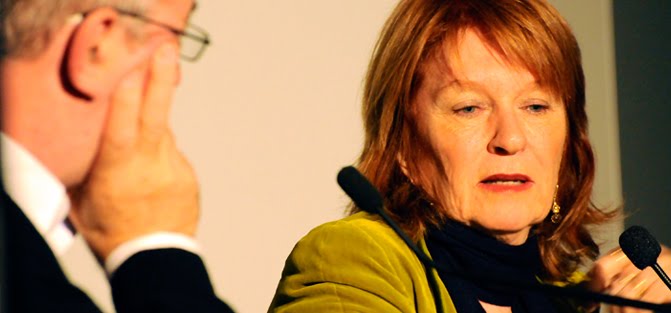
With the biggest festival to contend with, The Sydney Film Festival is now in its 57th year, Clare has been at the controls for four years,
“The role has many faces and is incredibly varied. I guess the critical part of my job really is the selection of the films for the festival and the overarching architecture of the guest filmmakers; choosing the guest filmmakers who will come to accompany those films.”
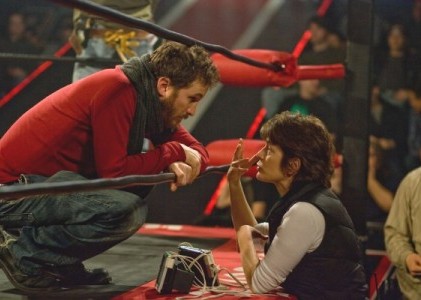
Both Natalia and Allanah founded their own festivals with the focus on the cinema closest to their own hearts, Spanish and Australian,
Running in five cities, The Spanish Film Festival comes to the end of its 13th year at the end of May. Natalia is hands on with every part of the festival,
“I reinvent the festival every year, by that I mean every year the program has completely different things to offer. I also work with the schools in promoting the films for kids. I supervise all the design of the website, the television commercials that we have, the program, the whole image of the festival. I also supervise the coordination of the print movement with the chairman. A bit of everything really”
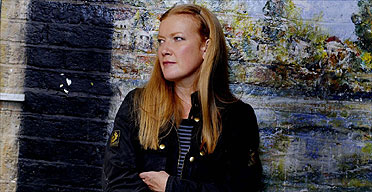
The youngest of the festivals, The Dungog Film Festival runs over four days in May in the picturesque Hunter Valley region. This year is the 4th year of Allanah’s festival;
“I wear a lot of hats in this particular job. It is about developing a really dynamic and diverse festival that showcases the best of Australian screen content across the board. And really my focus has always been to create something that is about bringing Australian film and content to Australian audiences.”
How did these three hard-working ladies start their love affair with the cinema?
Clare, a country girl growing up in a small town, doesn’t quite have the childhood stories about films you might expect from such a passionate cinephile.
“You read all the wonderful tales about Martin Scorsese being taken off to see Red Shoes as a four year old by his mother, I have a very very scant number of stories to tell from my early childhood and teenage years. I can remember E.T. at the Leongatha drive-in, and Hanna Barbera productions’ Charlotte’s Web at Frankston when I was four or something. But really my passion for cinema came about because I lucked into taking on Media Studies as a course. I was majoring in cinema studies and film production. It was really there and the move to Melbourne and being surrounded by the opportunity to try all sorts of cinema I hadn’t known about before. Through things like the Melbourne Cinémathèque, and the Kino cinema had just opened at that time. It was a very exciting time for me then.”
In contrast Natalia’s induction to the world of films started from an early age in Spain, as part of a long-term family love affair with the cinema.

“My mother was a film critic at the national radio in Spain and used to do all the reviews and interviews for the San Sebastian International Film Festival. My father was more of a painter, but did the billboards, back in those days they were painted by hand. They both loved cinema, arthouse cinema- so I grew up watching Pasolini and Fellini combined with Disney films. It was really exciting, obviously everyone in my family loved cinema. For me it is like the air I breathe, I really need it, it is more than just like it, it’s a real need, I suck life from cinema.”
Allanah’s commitment to Australian cinema and Australian filmmakers comes from her drive to work hard and her belief in giving everything a go;
‘I came here as a refugee, when I was three, with my family. Everyday that I’ve been here, I have a sense within me about how lucky I am, that I ended up here, and how different my life would have been, had my mum not chosen to go to the country that is the furthest away from Russia. We came with one suitcase, we lived in housing commission properties, it was pretty tough for both my family and me. My parents instilled in me a very strong work ethic and a desire to be educated, that was something that was always in me. For me it wasn’t so much about what I was going to do, I didn’t know I was going to be in film, I just knew whatever I was going to do I was going to throw myself in 150%.”
Although these women have very different backgrounds, they all seem to have found the place that suits them best in their roles as festival directors.
Before becoming the Festival Director of the Sydney Film Festival, Clare was Head of Film Programs at ACMI (Australian Centre for Moving Images);

“I started volunteering at the Melbourne Cinémathèque and really got into programming as a sort of way to just feed myself if you like. I found out that was exactly the right place for me to be, because it combined the critical thinking I like to do about films with the role of actually taking that to an audience. Where I get my real buzz, is that great moment when the lights go down and you feel the audience engaging with a film that you’ve worked really hard to get onto that screen, and it is a very very rewarding moment. So it turns out that the perfect place for me was precisely in-between criticism and filmmaking.”
Natalia worked in the Spanish film industry as an editor for a number of years, before moving half way across the world;
“When I moved to Australia I realised the Spanish film industry was misrepresented on the screens here. You could only see Carlos Saura and Pedro Almodóvar, the usual suspects kind of thing. I thought there was more to it and because of my contacts and knowledge of the industry I could do something about it. I wasn’t really thinking about a film festival, I thought more about a film society and bringing a few films and doing Q&As etc… That grew to a national film festival with 45 films this year.”
Allanah movement into films began with a successful side project whilst studying business, starting up and promoting a club night called Barberella;

image
“It ignited something in me, and it became clear to me I had to do something creative that included the business side of me. I kept doing events. I knew I wasn’t going to work for a corporate company, I needed to do something else. I met Stavros and I worked with him on Strange Planet. I remember the first time that he brought me to set, to the production office and I walked in and I just had this moment where I just knew this is exactly what I wanted to do. It was creative, it was exciting, it was risk-taking and it tapped into my love of clothing, my love of music, my love of hard work, my love of the business side and story telling.”
In 2007 Allanah co-founded the Dungog Film Festival, the biggest festival of Australian content in the world, with her partner Stavros Kazantzidis (with whom she co-wrote and co-produced the AFI award-winning Russian Dolls) “People always find it quite amusing that it took a Russian and a Greek to put on the first Australian festival.”
This being women’s week, I had to ask these high-profile women, who are at the top of their field, were they concerned about the lack of women in key positions behind the camera in the film industry?
Clare made a point that I had found to be very true whilst researching,
“I certainly think you see a lot of women in producing roles, in bureaucracies, you see a lot of women now in the curatorial programming side of things. But I do think it still really is a struggle for women who are directing and are in certain technical roles as well. I’m not really sure why that is the case.”
And while Allanah is very positive about the Australian Film Industry; ‘in this country we’ve got a lot of really talented women filmmakers. I think Australia is quite progression in that regard.”
It is Natalia who is most passionate about the issue,
“I think probably when people are reading your article they will be like ‘ah here we go again’ but you know there are still people who don’t want to acknowledge there is an issue for women to be treated equally. You can see it in the film industry, I think it is about 8 or 9 % of films are directed by women, and 15% of important roles in the film industry are held by women; that is directing, writing or producing. Why is that, we are as creative as males. This year a women won an Oscar for the first time in history- why is that? This is something that we need to question obviously.”
Clare, Natalia and Allanah all thrive on the shared film experience, bringing their audience, original and dynamic programs. Each of their festivals showcase the amazing diversity in film today. Their programs all reflect the breadth of female filmmaking talent too. This year the Spanish Film Festival had a special section devoted to films from female directors, called All By Women, (some recommendations of films to look out for during the SFF and Dungog Film Festival from Clare and Allanah are at the end of this piece).
I asked Clare, Natalia and Allanah to each give me a highlight or a stand out moment from their festival careers so far and I think each answer illustrations their dedication to film and their desire to put on the best possible events for their audiences.
Clare “After the intense effort of establishing the official competition having Hunger take out the first official competition prize [in the inaugural year, 2008] was a really terrific moment. Being able to secure the second screening in the world of a film like Steve McQueen’s Hunger for that competitive program and then having such an extraordinary film go on and win, really set the agenda, set the benchmark. A festival director would want that to happen for a competition, which was about audacious, courageous and cutting edge films. That was definitely a very significant moment.”
Natalia “Just getting [the festival] up and running every year! Because every year there is a different story, the financial crisis, the swine flu- last year we couldn’t get any films coming out of Mexico, and we’d bought out a special Luis Buñuel retrospective. This year we had the volcanic ash in Europe. Every year the biggest achievement is to look back in June and say “we’ve done it”. It is a learning curve, when I look back at the first festival with four films over a weekend and where we are today- you can imagine ever single day is huge learning in every aspect of what you do.”
Allanah “I guess just having 500 people at the Saturday night party dancing together. From the ages of 18-85, all different backgrounds and social backgrounds, all mixing and mingling and having such a wonderful time together. Last year we had Three Blind Mice, on the Saturday night and we had a line going from the cinema right up to the train station to get into the film, and we ran out of seats, so we were throwing more seats in.”
The Spanish Film Festival has finished for this year in Sydney, Canberra and Adelaide, but is still underway in Brisbane, and due to ‘popular demand’ the festival has been extended in Melbourne- click here for details.
The Dungog Film Festival runs from 27th -30th May. For programming and ticketing information click here
The Sydney Film Festival runs from the 2nd-14th June. For programming and ticketing information click here
Here are some recommendations from Clare and Allanah of some of the best of female directed films on offer at their festivals;
The Sydney Film Festival- Clare

image
Miranda Otto in Shirey Barrett’s South Solitary
“I’m so excited this year about how many films we have in the program that are directed by women. I couldn’t be more delighted to be opening and closing the festival with films by Shirley Barrett and Lisa Cholodenko, two very intoxicating filmmakers who have great track records and whom we have been waiting for next films from for quite some time. You look at their films, you look at Debra Granik’s Winters’ Bone, the very wonderful, compelling, stark and riveting film that won the jury prize at Sundance this year. You look at Claire McCarthy the Sydneysider’s second feature The Waiting City, which has just come leaps and bounds since her first film which we loved very much and did the world premiere in my first festival Cost Life. As well as Julie Bertucelli’s film which is screening in official competition, a French Australian co- production called The Tree and Sophie Letourneur, a young, extraordinary French director who has made a film Chicks about a bunch of Parisan students in their early twenties, who all share this apartment called the Ranch, which is a very different kind of film again. Through to someone really classic, well classic in the sense that she is a contemporary master, Claire Denis and her wonderful film White Material. I think that there are a lot of really terrific films directed by women on offer in the festival this year”
Dungog Film Festival- Allanah

image
Lily Bell-Tindley and John Hurt in Belinda Chayko’s Lou
“This year’s program shows how many women are working in the industry- Belinda Chayko’s Lou is the opening night film Sue Brooks’ Subdivision is the festival’s closing night film. We also have the World Premiere of Surviving Georgia by Sandra Sciberras and Kate Whitbread. We’ve got Alexandra Schepisi’s amazing short film One Night. Also this year there are Master Classes with Gillian Armstrong and Nadia Tass, as well as a panel discussion called Women in Film, done in collaboration with iTunes’ Meet the Filmmaker Panel, which features Belinda Chayko, Gillian Armstrong and Alexandra Schepisi.”
Published as part of Trespass' Women's Week