Showing posts with label Australian Film Festival. Show all posts

Sunday, February 28, 2010

French Film Festival Preview

image

Now in its 21st year, the French Film Festival starts in Sydney and Melbourne this week, with other cities to follow. As part of Trespass preview for the festival I picked some film highlights from the program, some I've had the pleasure to see already, and some I'm desperate to see.


Micmacs/ Micmacs À Tire-Larigot

image


This latest comedy from director Jean-Pierre Jeunet (of Amélie and Delicatessen fame) again looks at a group of misfits. The story follows the unlucky Bazil (Dany Boon), who is left with a bullet lodged in his brain after an accident. He teams up with an eclectic mix of scavengers to seek revenge on the weapon manufacturers who have caused him such pain. With the director’s usual sense of quirky humour, the film creates a charmingly detailed world in which the action unfolds.


I’m Glad my Mother is Alive/ Je suis Heureux que ma Mère soit Vivante


Co-directed by father and son, Claude and Nathan Miller, the film was originally in the hands of Jacques Audiard (A Prophet), who stayed on as a producer. Based on an article by Emmanuel Carrère, taken from a real-life incident involving an adopted boy finding his birth mother and the unexpected results, the film was heavily praised at the recent Venice Film Festival. Be prepared for a thought-provoking film, without easy answers.


White Material


Starring the always amazing Isabelle Huppert (The Piano Player, 8 Women, Time of the Wolf), White Material is director Claire Denis’ (Chocolat) long-awaited return to Africa. Denis’ inspiration for the film has come from newspapers stories about white farmers in Zimbabwe and Kenya and civil wars in Sierra Leone and Liberia. Taking place during the chaos of a civil and racial conflict, the film is set around a coffee plantation in an unnamed country. Denis’ central characters must make survival choices as the social structures around them collapse.

So disappointed White Material isn't screening in Sydney, fingers-crossed the rumours about its inclusion in the Sydney Film Festival are true.


Gainsbourg: Je T’aime…. Moi non Plus/ Gainsbourg (Vie héroïque)


Screening as the Festival’s closing night Gala, this Gainsbourg biopic is the directorial debut of graphic novelist Joann Sfar. Starring Eric Elmosnino as the iconic singer, Serge Gainsbourg, the film traces his life- from growing up in Nazi-occupied Paris to the height of his success as a singer/songwriter. Included in the film is Gainsbourg’s notorious womanising, highlighted by his relationships with Brigette Bardot and Jane Birkin, among others.


Welcome


The less you know about Philippe Lioret’s critically acclaimed film before watching it, the better. With strong political and social commentary, Welcome explores France’s treatment of refugees using a story of friendship between two men who both feel the pain of lost love and dislocation. Starring Vincent Lindon as Simon and new-comer Firat Ayverdi as Bilal, the film captures the devastating reality of France’s hard-line policies. With some screenings including a Q&A with the director, this is a fantastic opportunity to learn more about the film whose success in France put increased public pressure on Nicolas Sarkozy.

Click here to read the full piece at Trespass

Monday, February 22, 2010

Interview with Steve Bisley

image

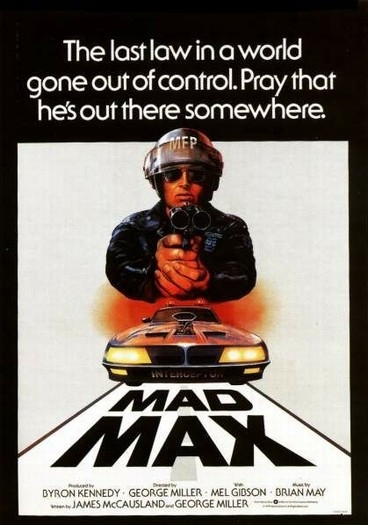
The Australian Film Festival starts on 24th February with a special screening of iconic Australian film Mad Max, followed by a Q&A session with its actors and stunt performers. Included in this Popcorn Taxi event is Steve Bisley, who played platinum-blond Jim Goose in George Miller’s (Mad Max series, Babe: Pig in the City, Happy Feet) 1979 record breaking film. A popular Australian TV and film actor, Steve Bisley starred in Frontline, Water Rats and Sea Patrol. His latest film, Red Hill is set to revise the Australian Western.

Steve Bisley kindly took some time-out to answer some questions about making the cult film Mad Max and his character- ‘The Goose’…

The augural Australian Film Festival starts on 24th February- why do you think Mad Max has been chosen to open the festival?

image

Because Max was such a groundbreaking film and possibly it took and still manages to take an audience to a place that for a change is not “uniquely Australian”.


A recent documentary, Not Quite Hollywood, which celebrates Australian genre films of the 70s and 80s, looked at elements of making Mad Max and by today’s standards of safety and insurance it looked amazingly lax, what was the experience like shooting the film?

When the Stunt Co-ordinator breaks his leg and the leading ladies leg in a motorcycle crash on the way to set on day 1 of filming, then Houston, we have a problem.

image


Your character in Mad Max, Jim Goose famously rides a Kawasaki motorbike, how much of the action was you, and how much was a stunt double?

I guess I was lucky to not only have been an immensely gifted and talented Actor, but I had also ridden motorbikes all my life. I did all my own riding for The Goose character, apart from the stunt sequences of course. I also doubled for a couple of “The Bikie” characters in some of the fast open road sequences. I still ride too fast on motorcycles.


Mad Max was made for a very small, privately funded budget, and went on to capture both the Australian and International box office, a formula many Australian films have tried unsuccessfully to replicate- Why do you think Mad Max struck a chord with audiences around the world?

I think there is a naivety, born out of a combination of youthful energy and inexperience that shines through this film and the combination of these two things set against the backdrop of this violent, desolate landscape really endears it to an audience.

image


There were some people who rallied against Mad Max, notably Phillip Adams. In an article for the Sydney Bulletin he wrote that Mad Max had “all the emotional uplift of Mein Kampf” stating that it would be “a special favourite of rapists, sadists, child murderers and incipient Mansons”. This description seems amusingly alarmist reading it now, but at the time how did you feel about this sort of moral criticism?

Thank God for Criticism, at least it means you’re being noticed


Mad Max has a real cult following even 30 yrs + after its release, there are Japanese Jim Goose websites and facebook pages- What do you think it is about your character that still resonates with audiences?

image

I was painfully aware that “The Goose would not be there in the 2nd half of the film, and I wanted audiences to miss him when he died and by all accounts they did. I had in my mind when we were shooting the film that I was Mercutio to Mel’s Romeo and that “The Goose” like Mercutio is such a hedonist and lover of life, that their passing leaves a regret and emptiness.


The ‘Golden Age’ of Australian cinema is considered to be the 70s and 80s when films like Mad Max, Picnic at Hanging Rock and Crocodile Dundee were released. There has been a lot of debate over the last year about why Australian audiences are not going see Australian films- as an actor how do you view the current state of Australia’s film industry?

I think that for a number of reasons we have “disappointed” audiences too many times and for too long. We have chosen the wrong films to make.


Red Hill, in which you play Old Bill, premieres at the Berlin Film Festival this week (screened on 14th Feb). The trailer had been causing quite a lot of buzz, can you tell us a bit about the film?

Love to, but at this stage I don’t think I’m allowed.

image

Patrick Hughes, the director/producer/writer of Red Hill, credits George Miller (director/writer of Mad Max series) as a major influence- do you see similarities in the two films (Mad Max and Red Hill)?

Yep, they’ve both got me in them.


There have been rumours for years about Mad Max 4: The Fury, with filming supposedly starting later this year and a cast named. ‘The Goose’ doesn’t actually die in Mad Max, when we last see him he is severely burnt but alive (surprisingly), could he not be resurrected for the 4th instalment?

Ask George.

Published on Trespass on 18/02/10

Tuesday, February 16, 2010

Interview with Barry Watterson


The inaugural Australian Film Festival begins on the 24th February, running til the 7th March, with the iconic Randwick Ritz Cinema playing host. Mixing classic Australian movies and new, unseen films, with educational programs, Q&As and other events this is a festival both celebrating Australian film and encouraging innovation in our film industry.

Festival Director, Barry Watterson took some time out to answer some questions about the development of the AFF, the Australian film industry and its future…

image

This is the inaugural AFF after last year’s Australian Film Week. How many people and how much time has been spent planning and organising this festival?

The screening of features during the Australian Film Week last year was dipping a toe into the water. As soon as it finished, planning began on the inaugural Australian Film Festival and we’ve been working on it since. There’s only a few of us in the office, but we reached out to industry professionals (to whom I’m very grateful) to guide us in building the structure of the festival and providing the technical expertise to get it up and running.


How do you go about choosing films to screen, what guidelines do you impose?

The guidelines were very flexible. The main purpose of the AFF is to provide a platform for Australian film content to be seen, so we accepted films of all genres, lengths and mediums (even online or downloadable). Essentially, we provided screen space for films that we thought were worth a cinema release or with a broad range of audience appeal until we ran out.


Why have you chosen to screen well-known and loved Australian films, as well as newer, perhaps unseen films?

We chose to create ‘events’ around our well known Australian films (opening night Mad Max with cast and crew, Bad Boy Bubby with a Q & A featuring Nicholas Hope and Happy Feet as a free screening event on Clovelly Beach) to draw attention to the festival and to the rest of our program of unreleased films, workshops and competitions. We feel that if we can get audiences connected to films they know, they will hopefully come to see newer Australian film works.


AFF will involve more than film screenings, with Q&As and educational programs. Is this indicative that this is not simply a festival for film-goers, but also for potential filmmakers?

Absolutely. The AFF is not simply a screening festival. It is mainly focused on the long term development of audience for Australian film content and providing the opportunity for future filmmakers to hone their craft on the way to making their masterpieces!


You have said that the festival is taking ‘a modern and global view of what film is’, can you elaborate on how you see this modern and global view?

For a number of reasons, Australian filmmakers are a few years behind the rest of the world. ‘Film’ is not just feature film; it is also short film, television, mobidocs (content made specifically for mobile ‘phones), mogies (actors integrated into gaming platforms), online downloads, gaming and much more. Filmmakers should be considering the best form for their film content and how best to deliver it to modern audiences.


There has been an enormous amount of debate regarding Australian audiences and their attendance of Australian films - Do Australians want to watch Australian made films?

I think (and hope) that they’re willing. I don’t believe that audiences should go to see a film just because it is Australian, and filmmakers should be more aware of the audience they want to see their film. It does seem, though, that Australian audiences are less forgiving to their home product (going to the movies is an adventure, people!). As well, Australian films have the problem of access. Consider that:

1. Australia is an English speaking country, the same as the biggest film markets in the world.

2. A well funded Australian film (including marketing) can be made for $3m. Avatar had a marketing budget alone that could have made 55 such Australian films. New strategies have to evolve to combat overseas release marketing budgets.

3. Australian films have often been screened in independent cinemas. There are not many left, Australian films screen for about a week and people have to travel long distances if they want to see them.


You have stated that your purpose for AFF involves long-term goals for Australian films both in terms of content and building audiences. Again the issue of content has also been a subject of much debate, with suggestions that Australian films are too high-brow and bleak - do you share these concerns?

Filmmaking goes through cycles. Avatar does well, now everyone wants to film in 3D. For the past few years our major filmmakers have been making very fine films with tough content. There is always a place for those sort of films, but a film ‘industry’ should have a wide audience appeal. Australians are some of the funniest people I know, but it’s not reflected in the filmmaking of the past few years. That will change, especially as filmmakers begin adapting new filmmaking techniques to deliver their stories to our audiences.


There is always the argument as to whether to view film as an industry or an art form. With Government subsidies being criticised for creating a weak Australian film industry, where do you fall in this debate?

We wouldn’t have a film industry without Government subsidies. We’re too small a market. Government subsidies in Australia are set up in a way so that filmmakers have to do a lot of work before they’re given funding. I do believe, however, that more of the funding should go to development of projects (from the script stage) with a focus on how the film is delivered once it is finished.


The Australian Film Festival will be the country’s most comprehensive presentation of Australian film content; are there plans to expand the festival to other part of Australia, outside of Sydney?

Yes. If we'd had a bit more time we would have delivered events in both Melbourne and Brisbane this year. We also have plans to provide access to regional and possibly international viewers.


As Festival Director, with the festival fast approaching, which are you feeling more; stressed or exhilarated?

I'm not sure how to tell the difference at this stage. There's still a lot of work to do, but it's exciting to work with Australian filmmakers in helping them realise their dream of giving their film a cinematic release. Now all they need is an audience.


Interview published on Trespass 16/02/10