Friday, August 20, 2010

Salt


On paper Salt sounds like an interesting film prospect; a spy thriller starring Angelina Jolie, Liev Schreiber, Chiwetal Ejiofor, all excellent actors who tend to pick good projects to work on, under the steady hands of Australian director Phillip Noyce (The Quiet American, Dead Calm). In the current climate of Islamic fundamentalist baddies, it is also a nice change to see a return of Communist Russians, determined to tear down the fabric of American society. Unfortunately the experience of watching Salt doesn’t live up to the hype. It’s not a bad film, it is even worse- it’s a boring film. This is a story of espionage that completely forgot to include any of the required intrigue and excitement – basically a thrill-less thriller.

Evelyn Salt (Jolie) is a CIA agent in the Russian department and apart from an unpleasant incident in North Korea, Salt seems to have a normal-ish life with her arachnologist husband. That is until a Russian defector names her as a long-time embedded Russian spy and through some rather inexplicable plotting she goes on the run, with her CIA boss (Schreiber) and Counter-Intelligence officer, Peabody (Ejiofor) on her tail.

Columbia Pictures must have been rubbing their hands with glee when the story broke earlier this year about the arrest of numerous Russian sleeper spies living in the US. The timing for Salt, which uses a similar set of circumstances as the basis for the film, is incredible. A piece of good luck, an insightful piece of scriptwriting or the most elaborate piece of film marketing ever (I’m not seriously suggesting Columbia Pictures embedded Russian spies in America just to increase the box office takings)- the coincidence probably suggests to potential film-goers that this film is a tapped on political thriller. It isn’t.

And what’s worse is the amount of talent squandered. The combination of an awful script (from Kurt Wimmer, Law Abiding Citizen) and lacklustre directing completely saps the life out of the film’s three stars. It is a hard task to make Schreiber (Definance) and Ejiofor (Serenity) completely uninteresting, yet somehow Noyce has managed it here. Jolie, who worked with Noyce on 1999’s The Bone Collector, is robotic in her performance and lacks any sense of being fallible, making her character rather inaccessible to audiences.


You can forgive the film’s ridiculous plotting- this is a genre reliant on certain breaks from reality and disassociates itself from the realms of what is humanly possible. But while there are a few good action sequences, these aren’t enough to combat the film’s monotonal performances and ultimately the film fails to generate any sense of exhiliration or charm- which is what you want and expect from a spy thriller. Salt had the potential to ignite and excite, sadly in the end it just fizzles.

Images 1,2


First published on Trespass
Thursday, August 19, 2010

Splice


Canadian director Vincenzo Natali scored a cult hit with his first feature film Cube (1997). Made on a small budget the clever sci-fi thriller involved strangers trapped in a cube-like maze. Sticking with the sci-fi horror theme, but with a vastly improved (but not astronomical) budget, Splice is a project that Natali and his producer friend Steven Hoban, have been mulling around since the late ‘90s. The story plays with tropes that have existed around scientific experiments for centuries and is in many ways a modern interpretation of the Frankenstein story. Using ideas of genetics and cloning that brings with it ready understood moral subtext, Splice is a mix of schlocky B-grade fun and borrowed Cronenberg-esque exploration (read: The Fly).

Splice introduces us to two celebrity genetic engineers (they make the front cover of magazines) Clive (Adrien Brody) and Elsa (Sarah Polley).They have been successfully splicing together DNA from different animal species, creating strange tongue/slug/phallic looking hybrid creatures that could hold the key to cures for animal diseases. Funded by an (evil) pharma corporation who want to see money returns for their investment, Clive and Elsa’s plans for more experimentation are halted to try and work up some pharmaceutical benefits from their research.

Driven by a higher cause- Science for humanity- Elsa and Clive, after some prodding, embark on a secret experiment splicing human and animal DNA- du-dun-dunnnnnnnnnnn. The discourses on the morality of messing with nature are as old as the hills, and as such we know from the beginning of the film nothing good can come from it.


Frankenstein’s monster of the piece, DREN (Delphine Chaneac) looks predominately human, but has some interesting faun-from Pan’s Labyrinth’s legs (thanks to executive producer Guillermo del Toro) and some peculiar additional animal anatomy. But of course the real monsters of the piece are the full-humans, who obviously failed Ethics 101.

Natali’s does make some interesting points looking at the current practice of delayed child-rearing by young professionals. Our two central characters are too busy to have their own children, yet inadvertently make one anyway whom they have to raise during the film. Canadian actress, Sarah Polley has been a fabulous asset to films since her breakout performance in Egoyan’s Sweet Hereafter, and teases the emotional aspects from Splice’s script. Brody is pretty good at playing cocky so sits well in his part of rock n’ roll scientist- getting to wear some of the most patterned suits ever made.


Splice is most enjoyable when it embraces and revels in its science-experiment-gone-wrong cheeky horror persona. Segments of this film are hilarious (hopefully intentionally) with completely over-the-top gore and general inappropriateness. But when the film tries to bring up its serious side, it is all too easy to think of films that tackle the subject matter with more inventiveness and original thought than this.

Images 1,2,3


First published on Trespass

Sunday, August 15, 2010

The Special Relationship


From the writer Peter Morgan, who brought us The Queen and Frost/Nixon, comes The Special Relationship- a film that examines the close bond that grew between Bill Clinton and Tony Blair during their time in power. Using the established British cast from The Queen, and adding in some American players, the film covers Blair’s rise to power, Clinton’s sex scandal and the NATO bombing of Kosovo.

Told predominately from Blair’s (Michael Sheen) perspective, The Special Relationship charts his meteoric rise to power contrasting it to the decline and wane of Clinton’s (Dennis Quaid) popularity. Starting in 1993, the film shows how Blair learnt the art of spin from Clinton and then surpassed him on the international arena; the film finishes with Bush's election in 2001. Following the politicians and their wives, Cherie (Helen McCrory) and Hillary (Hope Davis), the film spends time behind the doors of 10 Downing Street and the White House and considers the genuine friendship that developed between the couples.

The script takes a bittersweet look at the two men that thought they were starting a universal centre-left political revolution, but instead got swept up in their own legacy making. Sheen and McCrory are old hands at playing the Blairs, with both actors creating their own characters, not simply impersonating their namesakes. Hope Davis is an excellent addition to the cast, taking on Hillary’s mannerisms with enough subtlety to make her performance believable. Dennis Quaid’s Clinton on the other hand feels mimicry; the voice he adopts is just plain distracting.

While for the most part the acting is excellent and the script, thoug not groundbreaking is funny and clever, the film is let down by its director, Richard Loncraine. He places way too much emphasis on guffawing and lingering looks between Blair and Clinton, taking the film dangeriously close to bromance territory (admittedly high-brow bromance). Watching The Special Relationship it’s hard not to think that the material is better suited to a TV show format. In fact in the USA it screened as a made-for-TV movie, scoring Sheen, Quaid, Davis and Morgan Emmy nominations.

3/5


Images 1,2

First Published in The Brag 09/08/10

Thursday, August 12, 2010

John Hughes Day

First published 06/08/10 at Trespass


Trespass has chosen to honour the late writer/director John Hughes today. Hughes was the man behind classics such as Pretty in Pink, Weird Science and Ferris Bueller’s Day Off and as such a champion of Generation X. Sadly it was a year ago today that the 80s icon died of a heart attack at just 59. His premature death was a blow for the children of the 80s who had grown up with his teen films and his comedy movies. For most of us Gen-Yers, Hughes’ most celebrated film came out before we were born, or whilst we were too young to be the target audience, but thanks to older siblings his films filtered through, forever emblematic of that era.


Teenage experience
Hughes will forever be associated with Teen films. Known as the man who gave the genre creditability, Hughes changed the way teenagers are presented in films and in doing so his films became a part of the 80s pop culture influencing not just films, but fashion and music for a generation.

Hughes’ films that centred around the American high-school experience showed their tribal nature and the sense of alienation many teens feel. His films had the popular kids and the geeks, the jocks and the outsiders. Arguably Hughes then also defined teenagers, by giving them stereotypes to associate with, most viewers knowing they had a lot more in common with Hughes’ geeks than prom queens and rich pretty boys. Whether you felt a kindred spirit in Pretty in Pink’s Duckie or The Breakfast Club’s Allison, Hughes’ teenage audience knew one thing for certain, they didn’t want to end up like Hughes’ adults. The adult characters in these films were bullies who resented teenagers or clueless parents, completely out of touch with their children.


Racism and Classism
For all the praise that is being heaped on Hughes today, it is important to remember that not everyone is that enamoured by his films. Over the years suggestions that Hughes’ films are racist and classist have been put forward. The incredibly un-pc representation of an Asian exchange student- ridiculously called Long Duk Dong in Sixteen Candles and the overwhelming absence of major characters of colour in his films has caused some commentators concern. The elevated social standing of many of his characters has too been pointed at as a criticism of his film. If only writing about rich, mainly white characters was a crime, then poor Wes Anderson and Noah Baumbach would be in serious danger. Sticking to writing about ethnic groups and social situations that you are familiar with, isn’t uncommon, or prejudice. Given that Hughes films often had (though not always convincingly) characters from the wrong side of the tracks, it is a bit unfair to cast him as a classist.

The charge of racism is a lot more complex and tricky to unlock. Personally it wasn’t something I ever noticed in Hughes’ films, but while they may be products of their time, jokes at the expense of someone’s race isn’t okay. While most commentators, whether they’re fans of Hughes films or not don’t see intentional racism in his films, it should be acknowledged that there are others who disagree, and unfortunately with characters like Long Duk Dong, Hughes gave them ammunition.

Here are some far more researched and articulate arguments on the topic of race in Hughes films;

Alison MacAdam’s article Long Duk Dong: Last of the Hollywood Stereotypes?

Kristi York Wooten’s article John Hughes Films Weren’t Racially Diverse, but That’s OK


Hits and Misses
Not everything Hughes touched turned to gold, and after his 80s heyday Hughes had his fair share of cinematic flops. While during the 90s Hughes did make Macaulay Culkin a star, writing all of the Home Alone films, it’s fair to say that despite the huge success of that series, Hughes work after the 80s was flimsy family film fodder, including the popular but overly sequelled Beethoven films and the box office bombs of Curly Sue (1991, the last film he directed), Baby’s Day Out (1994) and Flubber (1997).

While it is sad that Hughes film career petered out over the last decade, it is credit to his writing that people still love his films and still hold many of his characters dear.

"Life moves pretty fast. You don't stop and look around once in a while, you could miss it."- the immortal words of Ferris Bueller

Images 1,2,3,4

Sunday, August 8, 2010

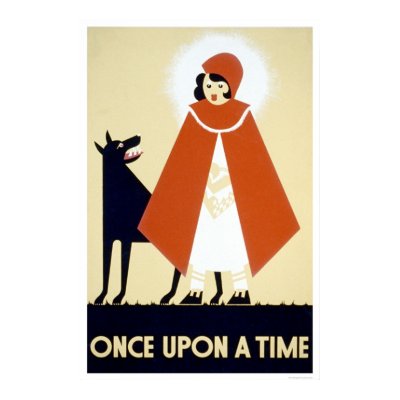
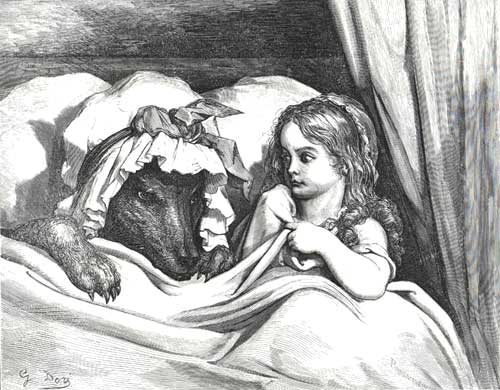
My, what big teeth you have- Film Interpretations of Little Red Riding Hood

The commonly told story of Little Red Riding Hood (LRRH) derives from the Brothers Grimm’s version and goes something like this- a little girl, who wears a red cloak with a hood, is on her way to visit her grandmother when she meets the Big Bad Wolf in the woods. Afraid to attack her in public, Big Bad sweet talks Little Red into revealing where she is heading and then buys time by suggesting she picks some flowers for her gran. Big Bad then rushes ahead to grandma’s house, tricks his way in and eats granny whole. When Little Red turns up with a freshly picked bouquet, Big Bad impersonates granny before also eating Little Red whole, then promptly falls asleep. In comes a hunter/woodchopper who slices Big Bad open and out pops granny and Little Red alive. They then help the hunter/woodchopper sew rocks into the wolf’s stomach, who upon waking goes to a well to drink and drowns.

Folk tale predecessors to our current sanitized version of LRRH played with themes far more disturbing than simply stranger danger. Interpretations of LRRH and it’s differing cultural variations have explored concepts of sexual awakening, sexual predators, sexual violence, cannibalism, the nature of men and the monster within.


"Alas! Who does not know that these gentle wolves are of all such creatures the most dangerous!"- Charles Perrault, creator the modern genre of fairy tales, is the first person known to have set the story to paper in 17th Century- giving it its title- Le Petit Chaperon Rouge (his version served as a morality tale, with no rescue for Little Red)

The sexual nature of LRRH has served as a warning to young women as to the sexual desires of men for centuries. However recent film interpretations of the fairy tale have added new dimensions to the story, often empowering Little Red instead of presenting her as defenseless and naïve whilst still playing with the story’s themes of gender, morality and sexuality. This article will look at The Company of Wolves, Freeway, Hard Candy and Hoodwinked!- all of which have taken a new spin on an old tale.


The Company of Wolves (Neil Jordan, 1984)

‘Little girls, this seems to say, never stop upon your way, never trust a stranger friend, no-one knows how it will end! As you’re pretty, so be wise! Wolves may lurk in every guise! Now, as then, it’s simple truth, sweetest tongue has sharpest tooth!’


Mixing fairy tale with horror and taking more than a pinch from Perrault’s telling of the story, director Neil Jordan (The Crying Game) adapted the film from a short story collection by British author Angela Carter called The Bloody Chamber.

Set in modern times, the film’s action largely takes place in the dreams of the young protagonist Rosaleen (Sarah Patterson). In these dreams Rosaleen lives in a fairytale village unsettled by strange wolf attacks. Her grandmother (Angela Lansbury) knits her a bright red cloak and warns her to “never trust a man whose eyebrows meet in the middle”. But Rosaleen forgets this warning and one day as she travels through the forest to see her grandmother, she comes across a handsome Huntsman (Micha Bergese), whose eyebrows meet. The huntsman challenges Rosaleen to a race to see who can get to granny’s house first. When Rosaleen arrives she finds that the Huntsman, who is in fact a werewolf, has killed and eaten her grandmother, but her emotions are confused- she is angry, afraid and attracted to the huntsman. After a scuffle where the Huntsman is shot, Rosaleen cares for the huntsman and opts to join his pack as opposed to staying with the villagers.

Part nightmare, part coming of age story, The Company of Wolves is one of the best filmic interpretations of the LRRH story, exploring the traditional fairy tale in an original and exciting way. Jordan created a topsy-turvy world confusing dreams and reality, man and beast, fear and desire. Added to the central narrative, the characters tell additional fairy-like-tales, delving the film further and further into storytelling and questioning whether the true monsters wear their hair on the inside?


Freeway (Matthew Bright, 1996)


Set in 90s California- Freeway is a modern, completely over-the-top, R-Rated twist on the LRRH story. Mixing violence and black comedy- Freeway gives us a Little Red that can more than take care of herself.

Vanessa Lutz (Reese Witherspoon) is an illiterate, street-wise teenager, with a drug-addicted, prostitute mother (Amanda Plummer) and an abusive step-father. Eluding social services, Vanessa takes off in a stolen car to seek out her grandmother. On the road Vanessa encounters Bob Wolverton (Kiefer Sutherland), who appears to be a kind-hearted therapist; but Bob’s true nature is much darker and he turns out to be the infamous I-5 killer/rapist. However Bob has met his match with Vanessa, who manages to overpower him, robbing him and leaving him for dead. A disfigured Bob survives and due to the differing social standings of Vanessa and Bob and his wife (Brooke Shields), Vanessa is sent to juvie only to escape for a final showdown with Bob at her grandmother’s trailer.

Writer/director Matthew Bright’s film has been compared to Oliver Stone’s (who’s the executive producer of Freeway) Nature Born Killers more than once and this should be indicative of the tone for readers who haven’t seen the film. With its ironic dialogue, lurid depiction of American white underclass and heightened violence, Freeway is the Little Red Riding Hood story on meth.

Showing that you can have too much of a good thing, Bright followed this film up with Freeway II: Confessions of a Trick Baby, that from all accounts is a much seedier, less successful, exploitation rehash of the Hansel and Gretel fairy tale.


Hard Candy (David Slade, 2005)


Written by Brian Nelson (30 Days of Night) and directed by David Slade (30 Days of Night, Eclipse) Hard Candy takes the premise of sexual predator to its modern extreme of pedophilia and internet grooming. Turning the story of LRRH on its head, Hard Candy is a confronting, disturbing and provocative film designed to make audiences squirm.

Hayley (Ellen Page), a bright 14 yr old, meets Jeff (Patrick Wilson), a thirtysomething photographer, at a café after weeks of chatroom flirting. The power seems firmly placed in Jeff’s corner. After telling Hayley about a bootlegged Goldfrapp LP, the pair return to Jeff’s modernist house, where the walls are adorned with picture of the young models he has snapped. The balance of power shifts dramatically during their time together and as tension grows Hayley proves to be far from an innocent victim.

This film questions who is the predator in the scenario, giving us a story of vigilantly justice. Nelson, an admirer of Buffy the Vampire Slayer, wrote Hayley as a strong, intelligent and powerful character. The comparisons to LRRH seem incidental, with both the writer and director claiming the similarities are more coincidences of costuming (red hoodie) and post-production poster art then an intentional fairy tale revision.

Hard Candy is a film completely unafraid of vexing its audience, creating a pedophile that is human, not monster or animal and a heroine that is violent and cunning. Shot over just 18 day, with only the two central characters for the majority of the film, Hard Candy is an impressive character piece. With clever use of colouring to convey mood and an eerie found soundtrack this film is a marvel of small budget cleverness, excellent editing and incredible performances.

Hoodwinked! (Cory and Todd Edwards, 2005)


This animated film is the most light-hearted vision of the LRRH story, but by no means the least modern interpretation. Set in a fairy tale world with talking animals and sing-song moments, this version not only empowers Little Red, but her grandmother too.

Starting halfway through the story, the film begins with Red (voiced by Anne Hathaway) arriving at her grandmother’s house to find The Wolf (voiced by Patrick Warburton) in her grandmother’s bed, dressed in her clothes. Granny (voiced by Glenn Close), who is tied up in a cupboard escapes and all chaos breaks loose when The Woodsman (voiced by Jim Belushi) busts through the window waving an axe. Cut to the police on-scene and each character is questioned giving their version of events. Added to the plot is an evil recipe-stealing bunny (voiced by Andy Dick), and a subplot that takes a swipe at large corporations that dominate markets (seriously).

While the animation for the film has been widely criticised (it’s no Pixar), the novel approach to the material garnered praise for the children’s film. Hoodwinked! opened up the idea of multiple voices to the fairy tale, showing truth is purely perspective. The Wolf isn’t a maneater- he is simply a reporter after a juicy story. Granny isn’t a victim- she’s an extreme sports enthusiast. The Woodsman isn’t a hero, he’s a wannabe actor rehearsing for a part. And most importantly Red isn’t a pushover.


These film versions of LRRH range from the comical to the violent and tense. Whether maintaining the fairy tale world of the source material or grounding the plot in a contemporary urban environment, these films all have one thing in common, they have a strong female protagonist, who is no longer reliant on a burly man to save her. The villain of the piece has also changed- the Wolf is more than simply a hungry animal. In some cases he is a sexual predator, in others he is resurrected as a character misunderstood.

The next filmic version of LRRH being touted is Catherine Hardwicke’s (Twilight) gothic reimagining starring Amanda Seigfried, Lukas Haas, Gary Oldman and Julie Christie- lets hope it lives up to its filmic predecessors.

First published in Trespass


Images
1,2,3,4,5,6

Tuesday, August 3, 2010

Possible Worlds- The Wild Hunt/Suck


Winning Best Canadian First Feature Film at the recent Toronto International Film Festival, Alexandre Franchi’s The Wild Hunt is an original examination of power, or probably more accurately- the lack of it. Centred around medieval re-enactments and the world of LARPers (Live-Action Role Players), the film was shot in Quebec in an actual rural LARPing facility-Le Duché de Bicolline, using real LARPers as extras.

The film follows Erik Magnusson (Ricky Mabe), a non-player, as he enters the ‘medieval world’ to try and patch things up with his girlfriend Lyn (Kaniehtiio Horn), who has recently been seduced by the game. Will Erik enter into the spirit of the place with its Knights, Elves,Vikings and maurading Barbarians in order to reclaim his lady?

This film makes a pretty serious statement about modern men’s feelings of impotence. Seeking power by adopting identities from by-gone eras and getting thrills from staged battles- the fantasy world of the LARPers, in the film, is part-history, part-Tolkien. This imagined reality allows people with status concerns in everyday life to take on personas of kings and warriors- giving them a sense of power and purpose. This deliberate departure from the mandane ‘normal world’ is best realised through the character of Bjorn (Mark A. Krupa, Co-writer and Producer), leader of the Vikings and Erik’s brother. Bjorn is so reliant on his created identity that he is unable to leave the fantasy world, staying constantly in character.

The female characters in this film are left largely unexplored- especially Lyn, who is far from sympathetic, so much so that you wonder why Erik wants her back. The story surrounding the brothers, Erik and Bjorn is however a compelling one- making The Wild Hunt an impressive debut. The film takes its audience into a fascinating and curious setting- as it considers the darker side of human nature and the need to feel powerful. The Wild Hunt has a real sense of menace that grows as the characters push the boundaries of their created world and identities. How far will the game go?


It was only a matter of time before a film combined vampires and rock music, because what’s cooler than the blood-sucking undead? The blood-sucking undead in a band! Suck is a rock musical that breaks with horror tradition, giving us vampires that aren’t all that pretty, or that broody; not concerned with eternal life, these blood-suckers are on a quest for eternal fame.

Suck tells the tale of a working band called The Winners. Touring bars in Canada and The States, the band has never had its ‘big break’. Living out of their tour hearse and with a truly crap manager (Dave Foley), The Winners seem to be going nowhere. That is until bassist Jennifer (Jessica Paré) has an unusual encounter with a mysterious audience member. Suddenly Jennifer’s stage appeal increases tenfold and the band actually gets a following. But at what cost?

Writer/director Rob Stefaniuk gives us a fun, at times absurdist, music-loving film with Suck. Along with the central band cast, the film also hosts to an eclectic mix of musician- including Alice Cooper, Iggy Pop and Moby. Suck plays for laughs not screams, with the more macabre moments twisted for comedic effect.

Using quirky special effects and with plenty of homages to the vampire genre and its musical influences this is a film with its tongue- firmly- in- its- cheek. Suck plays with a variation on the Robert Johnson and the Devil scenario, asking the question- how far would you go to be famous?

First Published in Trespass

Possible Worlds- Matt Ravier Interview

Possible Worlds- The Canadian Film Festival starts in Sydney on the 2nd August, for what will be its 5th year. Showcasing the diverse and exciting cinema of Canada the festival includes, features, shorts, documentaries and animations. Possible Worlds is the brainchild of Sydney based not-for-profit film festival organisation, The Festivalists, who also put on the Young at Heart and Access All Areas film festivals. On the 5th anniversary of the formation of The Festivalists (15th July) I caught up with one of its founders and its Artistic Director, Mathieu ‘Matt’ Ravier to discuss his passion for films, Canada cinema and Sydney’s Canadian Film Festival- Possible Worlds.

Matt’s interest in films was sparked at a young age, partially because of his limited access to them. His childhood bedtime meant that he only ever got to watch the first 20 minutes of films on television growing up- “this thing of having a curfew when I was younger and watching the first part of hundreds of films, really created this appetite because it felt like this forbidden thing that children didn’t have access to. You watch enough first half of movies- you just want to find out what happens to at least half of those”.

As a teenager Matt’s favourite pastime was going to the cinema, but it was a chance encounter with actor Harvey Keital, who was in Sydney promoting The Piano, that steered Matt towards a career in the industry. “Talking to Harvey Keital about his involvement with Tarantino, who was completely unknown at that time, producing Reservoir Dogs and acting in the film and just listening to him speak with such enthusiasm and passion… I think it was probably that day that I decided this is what I wanted to do- anyway possible, work in film. I had no idea back then what I wanted to do exactly within the film industry, but that was a key moment for sure.”

After school Matt returned to his native France to start a Business degree- “Both my parents are sort of lefty, ex-hippies and it was to get back at them. It was a rebellious move to go- look I’m going to become this really successful, really rich business man. Of course as soon as I started business school I realised I didn’t particularly enjoy it. But I did learn quite a lot of things that have been useful throughout the following years.” It was a last minute choice to study in Toronto that gave Matt his first exposure to the inner works of a film festival and Canadian Cinema- “I was really lucky to be able to do an MBA in Toronto, they have this amazing program there which is an MBA with a specialisation in Arts Admin. All your lecturers are Arts professionals and you get to learn a whole lot about how to run an Arts Organisation. As part of that I did an internship at the Toronto Gay and Lesbian film festival [Inside Out].” It was his experiences at Inside Out that propelled Matt into a career in film festivals. “That’s probably the year I thought wow, running a film festival is fun if you love films- because you get to watch a lot, you get to travel to film festivals, but it is also a cause in many ways. If you are working to showcase a cinema that is otherwise underrepresented then you are doing something beyond what say running a cinema entails- you are actually fighting for a cause. It is a cause I immediately recognised, it was something I believed in.”


The full interview can be read at Trespass