Friday, April 30, 2010

Le Concert

image

The Concert mixes humour with drama and adds a bit of heart-warming sentiment for good measure. French-Romanian director Radu Mihaileanu shows the transcendent and transformative nature of music. While the film doesn’t quite reach greatness, it’s an engaging story with a true appreciation for Tchaikovsky.

The film follows Andreï Filipov (Alexeï Guskov), who in his twenties was a celebrated conductor at the Bolshoi Orchestra. When he refused the orders of the ruling Communist Party, his fall from grace was swift and permanent. Thirty years on, he is now a cleaner, however when he intercepts a fax inviting the Bolshoi to play at a prestigious Parisian venue, he concocts a plan to reform his disbanded orchestra and regain his past glories.

The Concert presents a Russia caught between old communist ideals and new capitalist money. Filipov’s closest confidant, ambulance driver/cellist Sacha Grossman (Dmitry Nazarov) and his arch-enemy, passionate communist Ivan Gavrilov (Valeri Barinov) add much needed humour to this depressing appraisal of modern Russian.

Making up the French contingent of the film is the fantastic François Berleand as the cunning director of the Théâtre du Châtelet, and the captivating Mélanie Laurent (Inglourious Basterds) as Anne-Marie Jacquet, the guest soloist. Undoubtedly the tutelage of Sarah Nemtanu, first violinist of the National French Orchestra, aided Laurent’s powerful performance as a virtuoso violinist.

The real star of the film is the music. The sublime performance of Tchaikovsky’s Concerto for Violin and Orchestra for the film’s finale is the pinnacle of a gorgeous score arranged by César award-winning, Armand Amar.

The Concert certainly gets away with a fair bit of silliness simply by being a foreign language film and therefore seeming delightfully European. The Concert is by no means a perfectly polished film, but the last exquisite third makes up for the hiccups along the way.

3.5/5


image


Published in The Brag 26/04/10

Saturday, April 24, 2010

Spanish Film Festival- Preview

image

Now in its 13th year, this celebration of Spanish Cinema is starting in Sydney on the 5th May, with Canberra, Melbourne, Adelaide and Brisbane to follow. Showing more than 40 films this year’s festival has something for everyone. With dramas, comedies, documentaries and children’s films; from Spanish speaking countries like Chile, Uruguay, Peru, Costa Rica and Nicaragua; with performances from beautiful stars like Rachel Weisz and Penelope Cruz and showcasing the talents of acclaimed directors such as Alejandro Amenábar and Fernando Trueba- deciding which films to go see is going to be tough.

The Milk of Sorrow/ La Teta Asustada (Claudia Llosa, 2009) Peru/Spain

image

This 2009 winner of the Golden Bear at Berlin and Oscar nominated film was written and directed by Peruvian, Claudia Llosa. The film stars the mesmerising Magaly Solier (from the depressingly under seen Altiplano) as Fausta, a young woman haunted by her mother’s suffering. Fausta is said to have been nursed by the ‘milk of sorrow’, a title given to children whose parents were victims of the former terrorist regime in Peru. Combining social realities of contemporary Peru with the director’s magical realism, this film promises a truly exquisite cinema experiences.


The Dancer and the Thief / El Baile de la Victoria (Trueba, 2009) Spain

image

This year’s festival is paying tribute to Spanish director Fernando Trueba, whose back catalogue includes Calle 54 (2000) and Oscar-winning Belle Epoque (1992). Headlining this section is his latest film The Dancer and the Thief, a heist film adapted from a novel by Antonio Skármeta. Set in post-dictatorship Chile, the film follows the exploits of two ex-cons released during a national amnesty for non-violent offenders. Starring Argentine actor Ricardo Darín (Nine Queens and 2010 Oscar winner El Secreto de sus Ojos) and young Spanish actor Abel Ayala as the daring criminals, who plan to steal the millions Pinochet amassed during his Presidency.

Trueba will be attending some of his films’ screenings in Sydney, Melbourne and Canberra for Q&A sessions.


Agora (Alejandro Amenábar, 2009) Spain

image

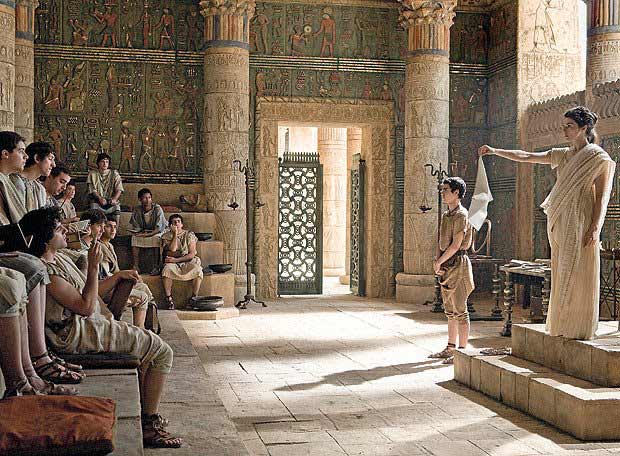
Screening on Closing Night, Agora is a big budget English language film from the director of The Others (2001) and Oscar-winning The Sea Inside (2004). Amenábar wrote, as well as directed, this European smash hit which stars Rachel Weisz (The Constant Gardener, The Lovely Bones) as Hypatia, an Alexandrian Astronomer. Set in 391 A.D. Alexandria where violent religious upheaval is causing chaos in the Roman Empire ruled city. Under siege, Hypatia and her disciples fight to save the ancient wisdom held inside the city’s famous library. Oscar Isaac (Balibo) and Max Minghella (soon to be starring in David Fincher’s The Social Network) play the men competing for Hypatia’s love. The highest grossing film in Spain for 2009, Agora won six Goyas (Spain’s equivalent of the Oscars) including best original screenplay and best cinematography.


Case 11.227 Colombia
/ La Historia que no Contaron (Azoye O’Shanahan, 2009) Columbia


Documentary filmmaker Azoye O’Shanahan follows Erika Antequera as she returns to Columbia, 20 years after the murder of her father, José Antequera, to find out the hidden reasons for his death. José Antequera, the Unión Patriótica (UP, leftist Columbian Political Party) leader was killed on 3rd March 1989 in Bogota. The filmmakers’ research shows how many murders of UP members remain unrecognised, leaving a mark on the record of Columbia’s, the oldest democracy in Latin-American, history. The title, Case 11.227, is the name given by the Inter American Court of Human Rights to the investigation into political state-sanctioned assassinations of UP members. This part of Columbia’s tragic recent history remains unresolved, with figures for the number of murders still contested.


Bad Day to go Fishing
/ Mal Día para Pescar (Álvaro Brechner, 2009) Uruguay/ Spain

image

This comedy/drama follows Jacob van Oppen (Jouko Ahola), the former strongest man in the world, and his manager Orsini (Gary Piquer) as they travel small South American towns staging wrestling exhibitions and challenging the locals. Any challenger that can beat Oppen in a three-minute bout wins $1000. When Oppen and Orsini arrive in the small town of Santa Maria, the unusually enthusiastic welcome from the locals leads to trouble for the pair’s established set-up. This quirky film is a great insight into contemporary Uruguayan cinema.


Blank Canvas
(Tim Slade, 2009) Australia

image

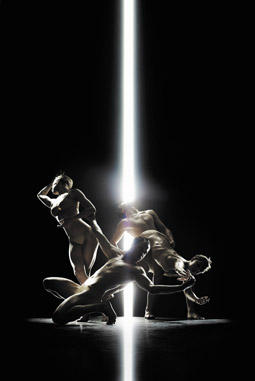
This documentary looks at the Sydney Dance Company as it tries to deal with the shock death of its new Artistic Director, Tanja Liedtke. In 2008 Liedtke was killed in a road accident, she was just about to take on her new role at the dance company, her predecessor, Graeme Murphy, had held the role of Artistic Director since 1976. As a result Noel Staunton, Chief Executive of the company, engaged three internationally renowned choreographers to create one work each for 2008, starting off from a blank canvas. These guests choreographers were Aszure Barton, Meryl Tankard and Spaniard Rafael Bonachela, who went on to be named the company’s Artistic Director at the end of 2008. This English language film is narrated by Kerry Armstrong (Lantana, Oyster Farmer).


This preview is taken from my piece on Trespass

Friday, April 23, 2010

When in Rome

image

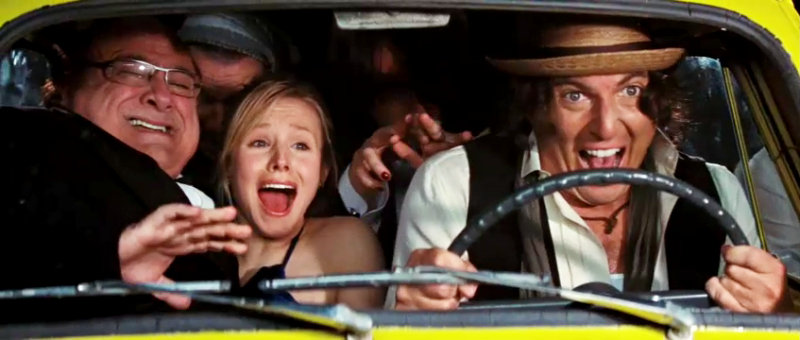
You can almost forgive this off-kilter romcom for its ‘pizza and pasta’ representation of Italy’s capital city, but forgetting the lumpy scripting that makes When in Rome neither romantic nor particularly funny, is a lot harder.

Career gal Beth (Kristen Bell) is appalled when she finds out her younger sister (Alexis Dziena) is getting married in Rome to a man she has only know for two weeks. The youngest curator at New York’s Guggenheim, Beth lives for her work, neglecting her social life.

At the wedding Beth meets cute best man, Nick (Josh Duhamel) and the attraction is instantaneous. However a misunderstanding results in Beth drunkenly fishing five coins from a wishing fountain and returning to NYC with them. Italian magic compels the owners of the coins (one of whom may or may not be Nick) to fall madly in love with Beth. It is from this point, in theory, that hilarity should ensue.

Kristen Bell’s (Forgetting Sarah Marshall) charisma can only do so much with this woeful plot. Bell, who usually takes parts with more bite, doesn’t suit this whimsical romcom. Dax Shepard (Baby Mama) and Will Arnett (Arrested Development, 30 Rock), cast as two of Beth’s suitors, should be praised for providing the film with its funnier moments. These actors deserve better than this Mark Steven Johnson (Daredevil, Ghost Rider) directed film.

You have to wonder what magical forces compelled so many talented actors, including Anjelica Huston and Danny DeVito, to sign on to this project. When in Rome fails to provide the requisite comedy needed to really enjoy a film. Similarly the necessary romance is missing, making it hard to care if Beth and Nick get together or not. Too concerned with pleasing everyone, When in Rome’s filmmakers may find they have in fact pleased no-one.

2/5


image

Published in The Brag 19/04/10

Monday, April 19, 2010

Jan Kounen Interview- Coco Chanel and Igor Stravinsky

image

Music + fashion = grand passion.

Dutch-born French director, Jan Kounen recently travelled to Australia to promote his beautiful Art Deco film, Coco Chanel & Igor Stravinsky. With a back catalogue including the ultra violent Dobermann, and the Shaman-injected western Blueberry, this adaptation of Chris Greenhalgh’s novel about a passionate affair between two Twentieth Century icons seems like an unusual choice for the Kounen.

"I received Coco & Igor and it was a complete opposite project for me, but it was resonating with me, really strongly, because it was completely challenging me. It’s not the universe that I knew."

Kounen was eager to take the project when he heard that Danish actor, Mads Mikkelsen was attached. "I wanted to work with him, because of his Danish work, his Danish films that I love, After the Wedding, Pusher, Adam’s Apple."

But it is the character of Coco (played by Anna Mouglalis) that seems to have inspired Kounen the most, "My feeling is that she is a century ahead in terms of her vision for women. She had her own business, she had freedom, she was a feminist. She had a vision of modernity, to see ahead, to sell herself as a brand." But Kounen is quick to point out that his film shows all the shades of Coco’s character "At the beginning you she her manipulating as a dark queen, bringing the family [to her house] to get [Stravinsky], but later you see something else, it’s not black and white."

The film focuses on the summer of 1920 when Stravinsky and his family stayed at Coco’s villa, Bel Respiro. Little is known about what actually happened between the designer and composer "You know that they’ve been lovers, you know who they were, who they were psychologically. You have books, information through the music, what they feel. You have all that. But from there, the rest is invention."

And just when it sounds like Kounen has gone mainstream, his fascination with mystical matters works its way back into the discussion. "Are [Coco & Igor] around, and feeling that maybe they’d like this film or not? You know I’ve done [the documentary] Darshan about a Hindu saint, I’ve done a film about traditional medicine. I can’t help having a drift to mystical realms; but when I saw this movie [Coco & Igor] I thought absolutely not. But suddenly the mystic came back".

Kounen remembers a spooky case of coincidence with glee: "I was going in the car to Grasse, for the first day of shooting, with only Coco. I put on the radio and there was the Rite of Spring, and they say ‘and now the Rite of Spring from Igor Stravinsky’. I never hear Rite on the radio like that. I felt that the character [Stravinsky] is speaking to me - ‘You forget me!’"

Surprisingly perhaps, Kounen is most enthusiastic, when discussing his 2007 short film The Story of Panshin Beka. Made as part of the portmanteau film 8: No Time Left (which includes shorts by Gus Van Sant, Jane Campion and Wim Wenders, among others), the affecting black and white short puts the spotlight on maternal health. "I think this problem resonates with me, because my grandmother died giving birth to my mother, " Kounen explains- "and because that still happens today in some areas of the world."

Shot with the Shipibo Indian tribe, whom Kounen has been linked with for years now, it is obviously a film that he treasures "My favourite film, you can put that down, my favourite one. But I love Coco and Igor."


Published in The Brag and Beat 12/04/10

Friday, April 16, 2010

The Book of Eli


The Hughes Brothers
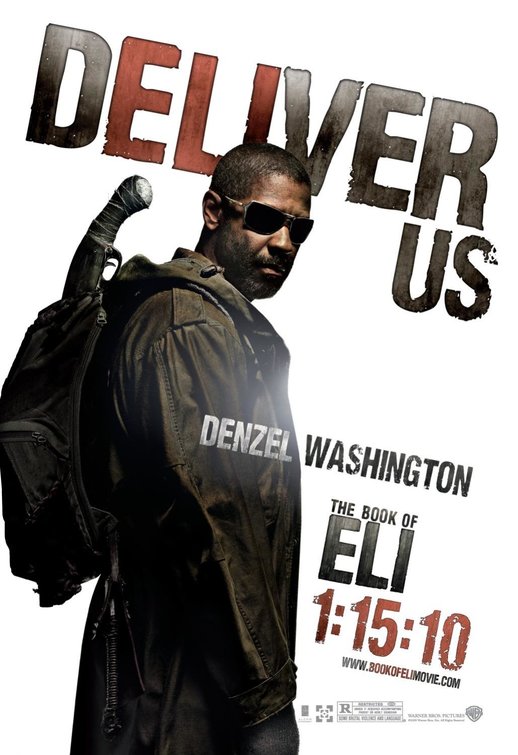
(Menace II Society, From Hell) are back with a post-apocalypse Western starring Denzel Washington (Training Day, Inside Man). Sadly despite much anticipation, The Book of Eli is a mess of miscasting and quasi-Christian preaching, which even the impressive visuals cannot save
.

Eli (Washington) is a lone traveller in a world thirty years on from a catastrophic war. Marauding gangs and conmen haunt the roads, but Eli is focused on a mysterious goal, heading West. Eli is the owner of the last Bible on Earth.

image

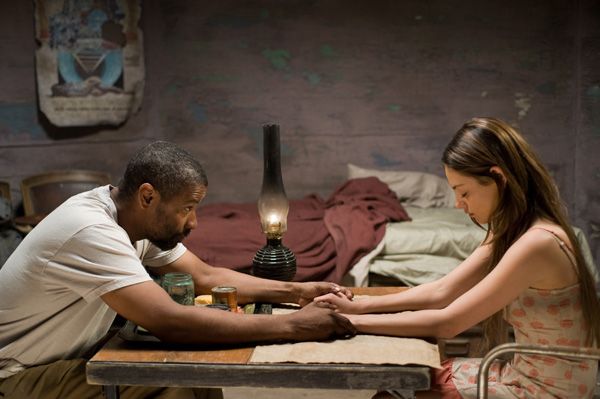
When Eli happens upon a small settlement, he catches the attention of Carnegie, (Gary Oldman, The Dark Knight) who rules the town as a dictator (subtly emphasised by the character’s introduction where he is reading a Mussolini biography). Carnegie is desperate to get his hands on a Bible, believing that the book will allow him to expand his control. He tries to tempt Eli with power and Solara (Mila Kunis, Forgetting Sarah Marshall), but the sword-wielding traveller rejects these rewards and high-tails it out of town with the book and the girl.

image

Washington’s charisma on screen as the reluctant hero isn’t enough to diminish the film’s scripting problems. Something Oldman seems to have figured out early on, so he just rings in previous power-mad performances like Stansfield from Léon (1994) and Jean-Baptiste Emmanuel Zorg from The Fifth Element (1997). Kunis is badly miscast as the innocent Solara, whose story arc into road warrior is so poorly developed that the transformation is competely unbelievable.

Read the full review at Trespass

Thursday, April 15, 2010

Date Night

image

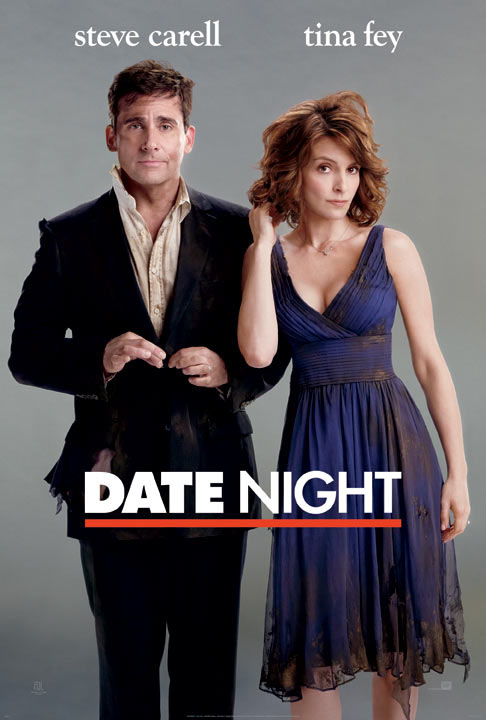
When you put Tina Fey and Steve Carell together in a film you expect it to be funny. Date Night, while it won’t set the comedy world alight, doesn’t disappoint. Yes the plot is predictable and the jokes aren’t particularly edgy, but considering the standard of American comedies recently, especially those with excellent comedians attached, Date Night isn’t half bad.

Claire (Fey) and Phil Foster (Carell) are a busy married couple with kids whose scheduled date nights have lost their romance. When a couple in their book club (Kristen Wiig and Mark Ruffalo) decide to divorce, citing the banality of their relationship, Claire and Phil begin to worry that they too are stuck in a runt. Breaking their usual date cycle, they venture into Manhattan, leaving the familiarity of suburban New Jersey. When they take someone else’s reservation at a pretentious restaurant, and are mistaken for a couple who are blackmailing a mobster (a very orange Ray Liotta), adventure ensues.

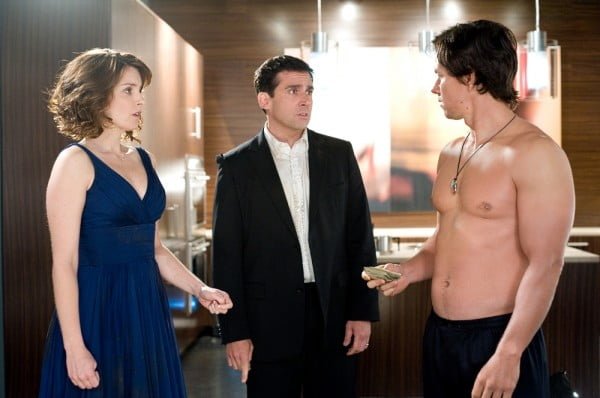
Following the tried and tested scenario of mistaken identity resulting in high jinx, the film is peppered with satisfying cameos that prop up an increasingly silly plot. James Franco and Mila Kunis are great as the real criminal couple, getting some of the best and most risqué lines. Mark Wahlberg is suitable eye-candy as a security advisor with a hint of the 007s, who helps Claire and Phil evade their corrupt cop pursuers (Common and Jimmi Simpson).

Fey and Carell, thanks to their similar comedic styles, make a pleasing partnership on screen. Both excellent ad-libbers, the full extent of their abilities can be enjoyed during the film’s closing credits. While the directing skills of Shawn Levy (Cheaper by the Dozen, Just Married) are questionable, this likeable pairing keeps the film afloat.

Date Night is really a self-fulfilling prophecy; its broad appeal making it exactly the kind of movie couples go see. While the film’s more honest moments about marriage and kids may cause some nervous giggling, for most this film will live up to requirements. It is just entertaining enough and just short enough (88 minutes) for easy cinema viewing.

3/5

image

Published in The Brag 12/04/10

Friday, April 9, 2010

Kick-Ass

image1 image2

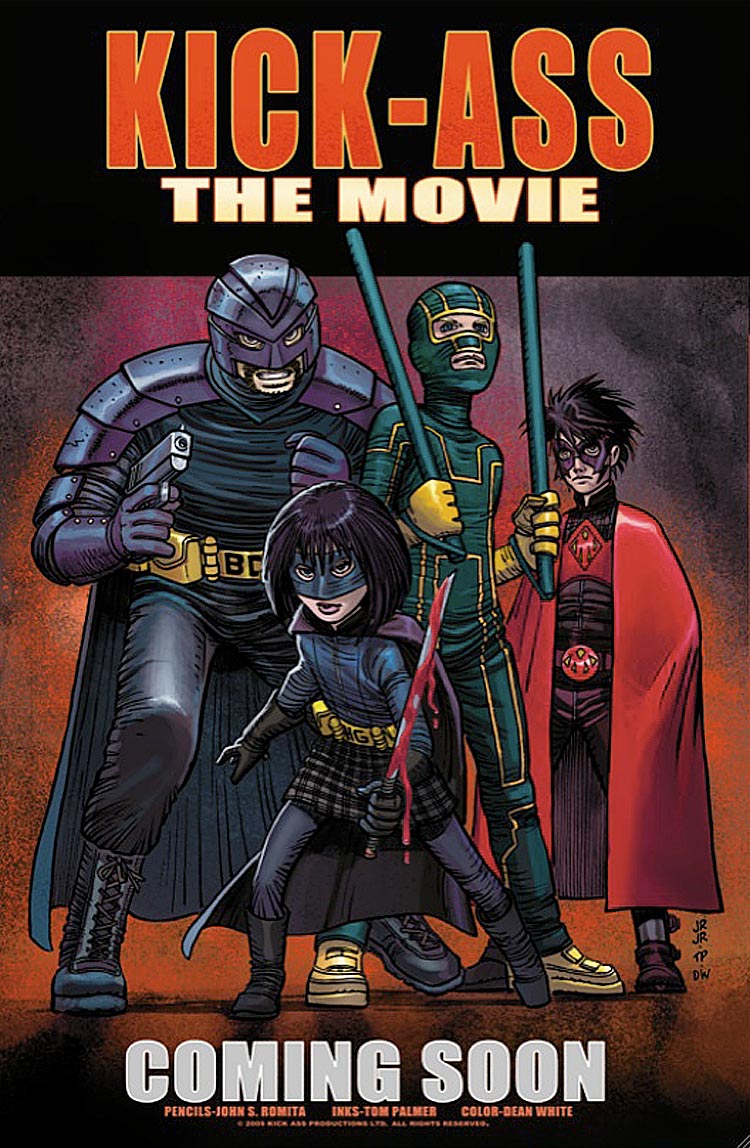
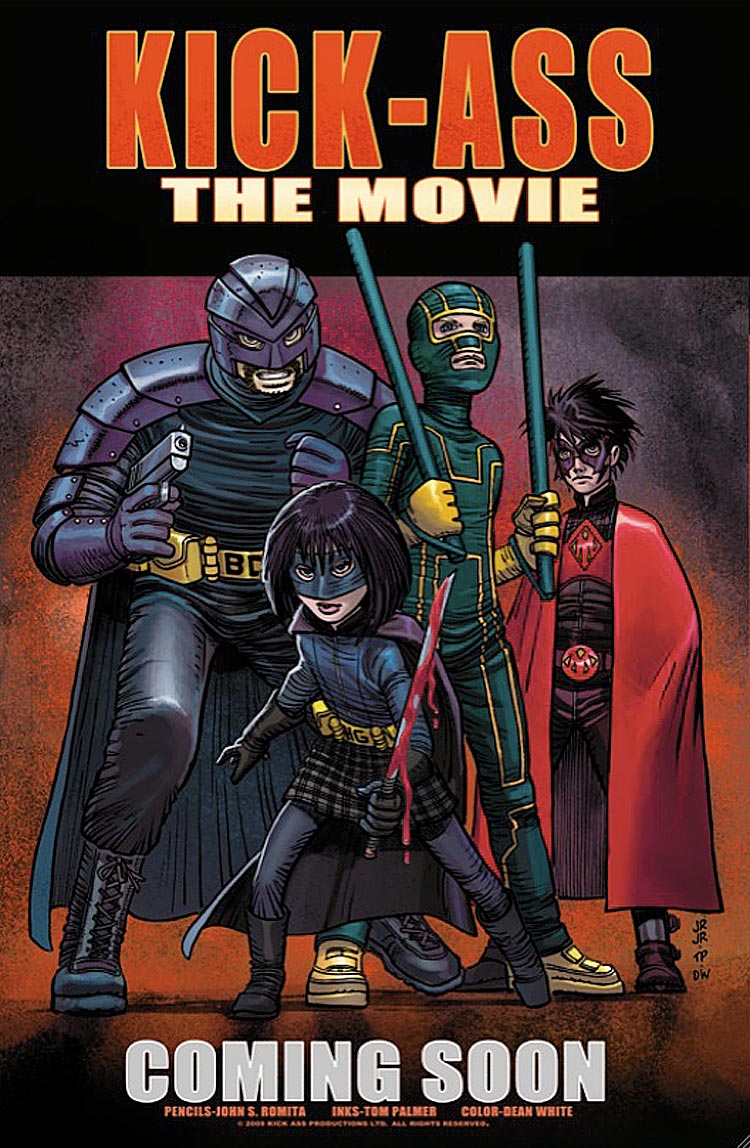
After Layer Cake and Stardust it didn’t look good for British producer/director Matthew Vaughn, but he has finally pulled it out of the bag with Kick-Ass, a post-modern superhero film. While not without its faults, Kick-Ass is a very pleasing mix of humour and ultra violence that should delight comic and non-comic book fans alike.

Following an unconventional route to the screen, Kick-Ass creators Mark Millar and John Romita Jr. sold the film rights before they had even published it. So the film and the graphic novel were essentially written at the same time. When Vaughn was unable to gain the backing of any of the big studios he made the film independently, raising the $70 million budget himself. This is an origin backstory that seems appropriate for a film that plays with the conventions of the genre established by Marvel and DC Comics.

image

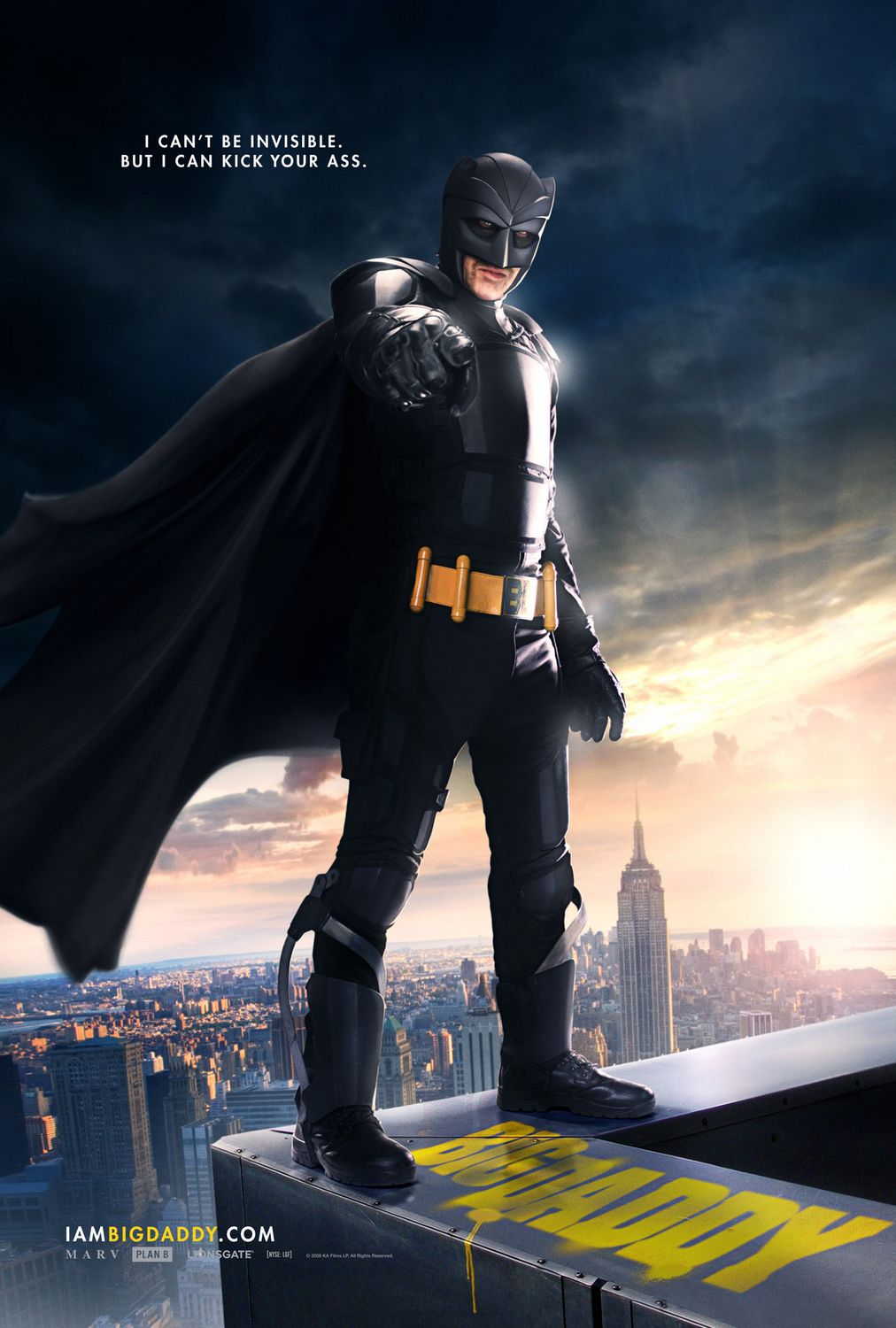
When Dave Lizewski (Aaron Johnson, Nowhere Boy) becomes a superhero, it is not due to a terrible radiation accident or to avenge a parental murder. He buys himself a costume and creates a character - Kick-Ass, partially because he wants to fight the bad guys, but mainly to see if he can. While Dave’s alter-ego becomes an internet sensation, it is real vigilantes, Hit Girl (Chloe Moretz, (500) Days of Summer) and Big Daddy (Nicolas Cage) who are really taking out the top criminals. Like any comic book film, there is the prerequisite nemesis, Frank D’Amico (Mark Strong, Sherlock Holmes), who is the head of a criminal organisation and father to Chris/Red Mist (Christopher Mintz-Plasse, McLovin in tights).

image1 image2

It has to be said outright that this film pushes the boundaries of taste and given the level of violence and profanity given to Moretz who is 13, it is no surprise she is being compared to Jodie Foster in Taxi Driver. Certainly this adult content in a child’s role will put many people off seeing the film and it may be worth watching the red band trailer if you are concerned. If you can’t stomach it, this movie really isn’t going to be your cup of tea.

image

Read the full review at Trespass